

























 0
0
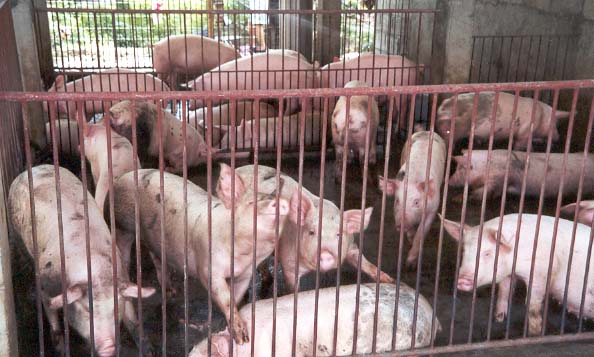
The Department of Agriculture (DA) is accelerating efforts to rebuild the country’s swine industry through an expanded repopulation program, beginning with the procurement of around 32,000 gilts, as it moves to recover from the long-term impact of African Swine Fever (ASF).
Spearheaded by the National Livestock Program, through its implementing unit, the Bureau of Animal Industry (BAI), the initiative forms part of a broader strategy to restore the national swine population to its pre-ASF level of about 13 million heads. Authorities are targeting the addition of 6 million hogs by 2028, underscoring both the scale of losses since 2019 and the urgency of strengthening domestic supply.

Agriculture Secretary Francisco P. Tiu Laurel Jr. emphasized that the program is central to the administration’s food security agenda.
“We need to produce at least one million more head of pigs this year alone if we are to stabilize supply, reduce reliance on imports, and move closer to President Ferdinand Marcos Jr.’s vision of a food-secure Philippines driven by stronger local production,” he said.
The program is backed by ₱1.6 billion in funding, according to Agriculture Undersecretary for Livestock Constante Palabrica. It is anchored on the Animal Industry Development and Competitiveness Act, which provides ₱20 billion annually over the next decade through the Animal Competitiveness Enhancement Fund to strengthen the livestock sector.
Palabrica also noted that improved disease control has enabled the government to ease emergency measures. “We have not detected infected pigs for some time now, which allowed us to dismantle checkpoints in Metro Manila after two years. This reflects the effectiveness of our containment strategies,” he said. He added, however, that the BAI remains vigilant as it expands the hog repopulation program nationwide.
Vaccination efforts continue for ASF and avian influenza, with the DA also exploring additional vaccine suppliers to ensure sustained livestock health and resilience.
The initiative has also highlighted capacity gaps within the sector. The BAI is expected to hire up to 4,000 regular personnel, including around 500 veterinarians, to support expanded operations and strengthen biosecurity measures.
While the program marks significant progress, the DA underscored that scaling up production while maintaining strict biosecurity standards will be critical to achieving long-term stability and reducing dependence on pork imports.
May 5, 2026/ Department of Agriculture/ The Philippines.
https://www.da.gov.ph