


























 0
0
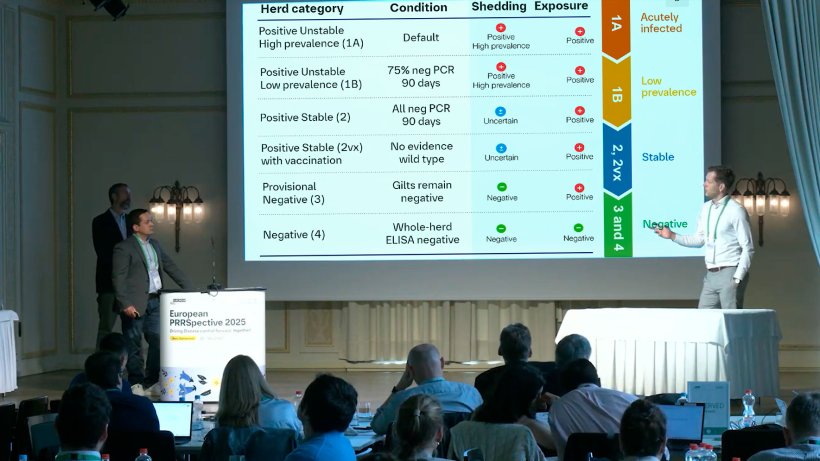
PRRS control often feels like a moving target. Over the years, the industry has developed more vaccines, diagnostic tools, and management strategies than ever before, yet stability remains complex for many systems. The idea behind PRRSpective is to take a step back, to simplify how we think and act against this complex disease.
Instead of constantly adding new layers, the goal is to focus on what truly matters, understanding where we stand, defining clear objectives, and executing a consistent plan across all stages of production

As Dr. Daniel Linhares explained, the issue is not the lack of tools, but how they’re used. He noted that “we don’t always apply what we already know,” emphasizing that control depends less on innovation and more on discipline. The emphasis is on clarity, not complexity, aligning diagnostics, management, and people toward a single, structured plan that can be sustained over time.
Step 1: Diagnosis: Understanding where we stand
The first step toward progress is diagnosis. Before any plan can be built, it is essential to know the true status of the system, whether the herd is stable, unstable, or in the process of elimination. Dr. Linhares reminded that “you can’t manage what you don’t measure.” Reliable testing, sequencing, and serological profiling provide the foundation to understand viral dynamics and immune status, and to identify weak points that compromise stability.
This diagnostic phase is not just about confirming the presence of PRRSV but interpreting what the data means within the production context. It allows veterinarians and managers to recognize where the system is performing well and where intervention is needed. Without that baseline, decisions risk being reactive rather than strategic.
Step 2: Planning: Defining objectives and building a plan
Once the current status is clear, the next step is to establish objectives, stabilization, control, or elimination; and outline the path to reach them. Clear goals make progress measurable and keep the plan focused. Drs. Linhares and Johnson both emphasized that success requires simplicity and precision
“A simple plan done well beats a complicated plan that no one can follow”
The plan should integrate diagnostic insights with practical realities such as pig flow, gilt management, and vaccination schedules. Dr. Johnson pointed out that farms often lose consistency because protocols become too complex or poorly aligned with daily operations. A good plan fits the system, not the other way around.
Step 3: Execution: turning plans into habits
Execution is where PRRS control succeeds or fails. As Dr. Lance Mulberry explained,
“Execution isn’t about doing more; it’s about doing the right things the same way every time”
Consistency across time and people turns strategies into habits and prevent instability from re-emerging.
Monitoring key indicators such as mortality, weaning weights, or time to stability helps identify deviations early. These data points don’t replace field observation, they strengthen it. Dr. Mulberry summarized it clearly “data doesn’t replace experience; it makes experience visible". Continuous feedback between results and practice ensures that the plan remains dynamic rather than static.
Step 4: Measurement and adaptation: keeping the plan alive
The idea of PRRSpective is not to set a fixed plan, but a living system that evolves with the farm. Regular evaluation is critical to confirm whether interventions are working and to identify when adjustments are needed. This process keeps the plan relevant while avoiding unnecessary overhauls.
Dr. Linhares highlighted that measurement is more than routine testing; it’s about interpreting results in context, comparing new data to the baseline, looking for patterns across flows, and translating those insights into practical adjustments. By keeping the plan adaptive, farms maintain long-term control without falling into cycles of reaction and instability.
Step 5: Team alignment and accountability: Everyone owns and is part the plan
Finally, as Dr. Marius Kunze noted, even the most technically sound plan depends on the people behind it. Sustainable PRRS control is achieved when everyone (veterinarians, managers, and caretakers) understands what needs to be done and why.
“Everyone needs to know the recipe, and everyone needs to own their part”
Clear communication, defined responsibilities, and shared accountability transform control programs into collective routines. When teams align around the same goals and metrics, the plan becomes resilient to turnover and operational stress.
Putting it all together
The PRRSpective framework emphasizes five connected steps:
- Understand where we stand: use diagnostics to define the current status.
- Define objectives and build a plan: simple, structured, and realistic.
- Execute consistently: make good practices a daily routine.
- Measure and adapt: use data to maintain progress and flexibility.
- Align people: ensure everyone involved shares ownership and understanding.
In the end, PRRS control is not about doing more, but doing better. Linhares summarized it well, success “isn’t about adding more; it’s about mastering what you already have and doing it well”.
By shifting focus from complexity to consistency, PRRSpective proposes a practical and sustainable way to approach PRRS, one that values structure, teamwork, and measurable progress over the illusion of newness.