

























 0
0
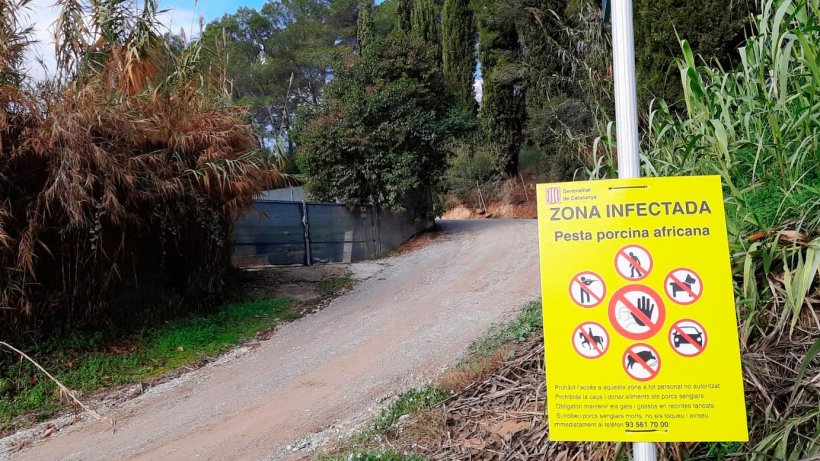
Thirteen weeks after the first cases of African swine fever (ASF) were detected in Spain, the situation has gradually become more complicated. Despite the best efforts of all the authorities, new cases have continued to emerge, some at a considerable distance from the initial ones.
Apparently, although lethal, this strain of the virus evolves more slowly than in previous outbreaks in other countries, meaning that some infected wild boars survive for several days, thus becoming mobile vectors of the disease. We know that none of the institutions involved in combating this outbreak are sparing any effort in this fight: everyone is doing their utmost to first limit its spread and then eradicate it.

In Spain, we have a successful precedent for eradicating ASF: when we became a full member of the EU (in 1986), ASF was endemic, and a few years later it was eliminated. Let us hope that the success of this first experience can be replicated.
We should celebrate that Spanish prices have begun to climb out of the hole. The minimum price of €1.00/kg live weight held steady throughout January and the first week of February. It is important to note that this price was the cheapest in the world during this period.
From the third week of January until today, slaughter numbers have been very high; the backlog of pigs accumulated after the Christmas holidays has been cleared, and the current increases are proof that the market is recovering its strength.
Currently across the EU:
- There is still a significant supply of pigs for slaughter; this supply is declining, but it is still abundant.
- With the exception of Italy, prices are significantly below production costs in all Member States and have been for several months.
- There are significant (or very significant) stocks of frozen pork as a result of heavy slaughtering and low consumption in January.
- Prices are rising, in most cases modestly.
There is no doubt that ASF is weighing down prices. The price will probably rise until it reaches (and possibly exceeds) the cost price, but no great joys are expected in 2026.
Despite Spain's difficulties and tribulations, Planet Earth continues to turn, and life goes on. With due respect to all the factors involved in the global market, we can state that:
- The price in the United States is at the same level as in Europe (it is usually lower): strong domestic consumption continues.
- In Brazil, the price is slightly above Spain's: this is unusual and is only possible due to Spain's weakness.
- The Japanese market has adapted to the absence of Spanish pork; in one way or another, different suppliers have filled the gap left by Spain (with a significant increase in the price of bellies: the star product in that market).
- In China, the price continues to linger at an abnormally low level; the economic crisis is slowing consumption. No radical change for the better is expected.
The recent increases at Mercolleida (+1.50, +3.50, +4.50 cents per kilogram of live weight in the last three sessions) have been achieved largely at the expense of the slaughterhouse margin. For now, this has been the case. Operators are holding their breath: pork prices should rise in order to continue improving the price of live weight. However, the huge slaughter in all Member Countries (led by Spain) has flooded the market and inflated stocks well beyond what is desirable. To consolidate future increases, it will be necessary and essential for pork prices to react and rise. We will see if this ends up happening.
Using a biblical metaphor, we could say that Spain is going through a period of lean times. We hope that ASF will be confined to the areas already affected and that there will be no cases in domestic pigs.
Although many third-country destinations remain open (accepting the well-known regionalization), the absence of some key destinations penalizes us. The Spanish market is gasping for air, lacking sufficient destinations.
Within the EU, we should point out that Spain has the cheapest price of all. This is completely exceptional and can only be explained by ASF. As we indicated in the previous commentary, one in four pigs in the EU is in Spain, and what happens here is reflected – to a greater or lesser extent – in the rest of the market. The markets of some member countries are “not at all comfortable” being more expensive than ours. We will see how things evolve.
To conclude (and as a form of self-help in these turbulent times), today we will quote two aphorisms from Eastern philosophy:
Confucius: “The greatest glory is not in never falling, but in rising every time we fall.”
Chinese proverb: “Failure is not falling down, but refusing to get up.”
Guillem Burset