
























 0
0
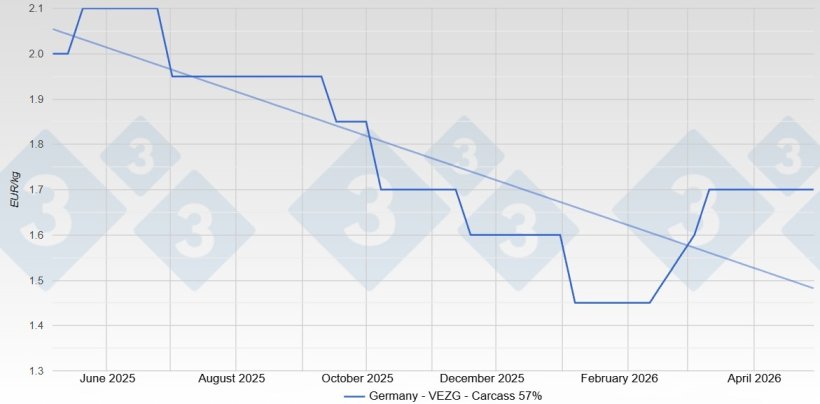
In April, the German pig market presents itself as largely steady over the course of the month. Around the Easter period and in the weeks that follow, supply and demand remained broadly balanced. Available slaughter pigs were marketed without major friction, and even shortened slaughter weeks failed to disrupt the overall flow. The benchmark pig price held firm at around €1.70.

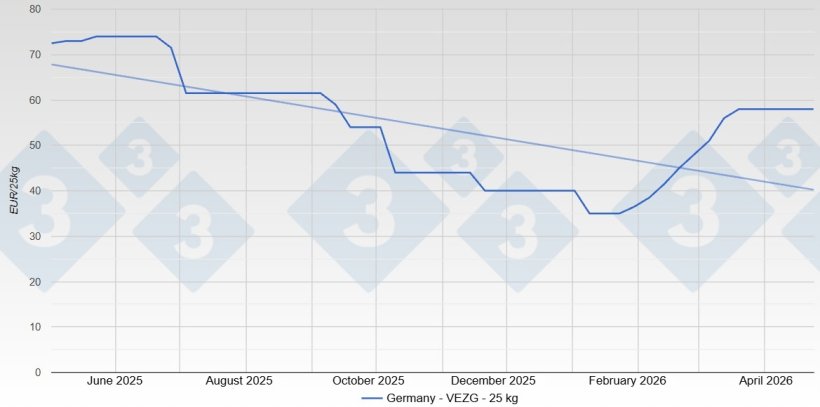
However, this apparent stability comes at a cost, and it is primarily the finishers who are paying the price. While slaughter pig prices remain unchanged, costs on the upstream side are moving in a different direction. Piglet prices have increased and are currently holding at a relatively firm level, supported by stable demand and an offering that continues to clear smoothly. As a result, the gap between input and output prices is widening. For finishers, this translates into shrinking margins and growing economic pressure, even though the market may appear balanced at first glance.
Beneath the surface, cracks are already beginning to show. On the meat side, momentum is lacking after the Easter holidays. Demand remains subdued, not least because weather conditions have delayed the start of the barbecue season. Slaughter companies are facing sluggish sales and repeatedly attempt to push for lower prices. At the same time, the not overly abundant supply of finished pigs prevents these demands from taking hold. Supply and demand remain closely aligned, with neither side clearly dominating the market.
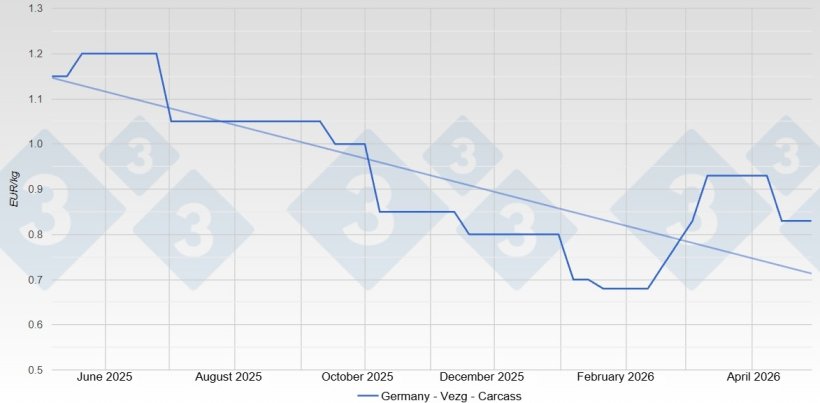
The situation is significantly more strained in the sow segment. Here, April clearly highlights how differently individual market segments can develop. A relatively large supply meets weak demand for sow meat. At the same time, additional volumes from other European countries enter the German market, further intensifying price pressure. The result is declining prices and an overall difficult marketing situation. While the slaughter pig market appears stable, the sow sector is increasingly losing balance.
Alongside current market developments, structural issues are moving more into focus. In particular, the future of sow production in Germany is becoming a major topic of discussion. Requirements for farms are rising, investments are becoming necessary, and at the same time economic prospects remain uncertain. The sector is therefore calling for a comprehensive support programme to prevent a sharp decline in domestic piglet production. Without such support, there is a risk of increasing dependence on imported piglets in the long term, fundamentally changing the structure of the production chain.
There is also continued movement at the company level. The withdrawal of Vion is a clear signal of the ongoing structural change within the industry. Slaughterhouses are changing ownership, and the sector continues to consolidate. Large companies are gaining influence, while smaller structures are increasingly coming under pressure. For producers, this means a shift in bargaining power and a growing concentration on a limited number of large buyers.
Looking beyond Germany, the international picture adds further layers to the situation. Within the European Union, the market remains broadly balanced, with prices in many regions moving sideways. At the same time, a lack of fresh demand impulses is holding back development. Spain remains a dominant exporter despite some declines, while other countries, including Germany, have been able to expand their export volumes.
A particularly important factor in April is the regionalisation agreement related to African swine fever. This mechanism ensures that exports from unaffected regions can continue even if restrictions apply in certain areas. As a result, key export markets are reopening. Most notably, trade with the Philippines has resumed after several years of closure, making the country once again an important outlet for German pork. This development creates new export opportunities, even if it has not yet translated into immediate price support.
At the same time, international competition remains intense. Countries such as Brazil are expanding their exports further and taking advantage of shifts in global trade flows. While China continues to play a central role, other markets are gaining importance and reshaping demand patterns. For Germany, this means additional pressure to remain competitive in an increasingly challenging global environment.
Looking ahead
The current situation is likely to persist in the short term. Slaughter pig prices are expected to remain stable as long as supply and demand stay in balance. A key question will be whether rising temperatures will boost domestic demand and finally trigger stronger activity during the barbecue season. At the same time, export developments will remain crucial, particularly in light of newly reopened markets.
Even if demand improves, the economic situation for many farms will remain strained. The widening gap between stable selling prices and firm to rising piglet costs continues to weigh heavily on finishers. April clearly shows that stability in the market does not automatically translate into economic relief. Instead, financial pressure is shifting within the value chain, with tangible consequences for producers.
In the longer term, structural challenges are becoming increasingly important. The future of sow production, ongoing consolidation in the slaughter sector, and developments in international markets will be decisive for how the pig market evolves. In this sense, April appears as a month of apparent calm, behind which a market in transition is clearly taking shape.