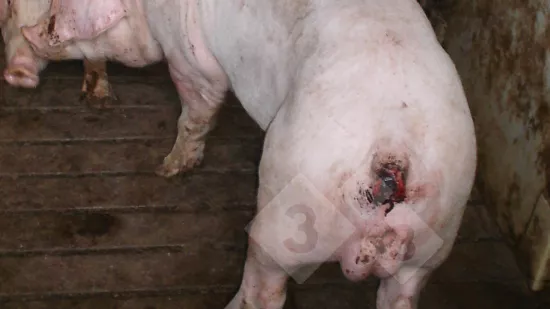






















Animal welfare aspects of good agricultural practice pig farming. Part 1 of 3
Natural behaviour, development of intensive pig farming, space and foraging needs of pregnant sows, avoiding aggression in pregnant sows.
Follow us on Twitter
stay informed with this section's rss feed
pig333.com is a blog about the value chain from pig to pork, aimed at veterinarians, farmers, etc. It contains articles by swine specialists on health, management, environment, biosecurity, wellfare, genetics,facilities and markets, as well as news, pig prices, clinical cases, events, etc..
Natural behaviour, development of intensive pig farming, space and foraging needs of pregnant sows, avoiding aggression in pregnant sows.
A reduction in particle size and multi-enzyme supplementation are useful strategies in the post-weaning period, but not in the growing period.
In pigs medicated, there were changes in the bacterial phylotypes after 14 days of antibiotic treatment, and an increase in the Proteobacteria (1-11%).

African Swine Fever (ASF) is probably the most complex disease affecting many pigs.
F4 fimbriae are highly associated with diarrhoea in piglets of all age groups whereas F18 fimbriae are associated with diarrhoea in piglets from late stages of suckling to post-weaning.
All filter types equally reduced the risk of airborne transmission of both pathogens, compared to non-filtered controls, supporting further application in the field.
80 g/kg dietary inulin may protect pigs against developing swine disentery by modifying the microbiota in the gastrointestinal tract.

The ingestion of Ig in sufficient quantity is the first priority. So much so that it even comes before the factor that seems most important: the feed supply.
Different feeding programs might be needed for barrows and gilts to optimize the production of high quality dry-cured hams.
This simulator calculates the quantity of
medicine to incorporate in water when
using a flow dispenser.
Increased dietary ZnO could lead to an increased competition among enterobacteria and, consequently, reduce the occurrence of pathogenic E. coli strains.

This case starts with abortions that occur dramatically in April. They begin on Saturday the 23rd and during the following week continue until reaching 34 abortions.

We should focus on actions that are in our hands to try to improve the profitability of our farms.