
























 0
0
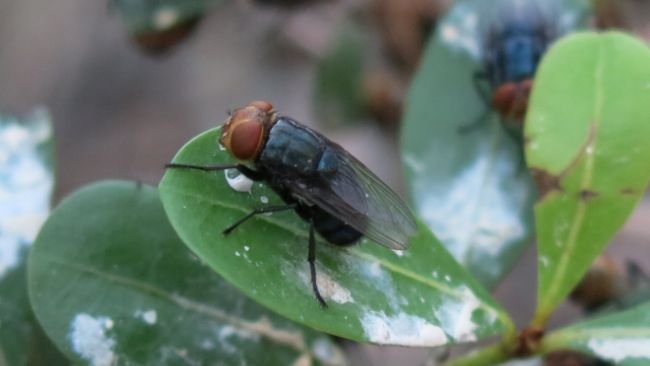
New World screwworm (NWS) can cause serious, often deadly damage to animals and people in areas where the pest spreads. While NWS is present in parts of South America—where infections in animals and people continue to occur—it was eradicated from the United States decades ago. In recent years, NWS has moved northward through Central America and Mexico.
Groundbreaking for a new sterile fly production facility at Moore Air Base in Edinburg, Texas took place on April 17. USDA is partnering with the United States Army Corps of Engineers to construct this facility, expanding the nation’s domestic capacity to protect livestock, wildlife, and public health from this serious pest.

A sterile fly production facility plays a crucial role in NWS prevention and response. In a biosecure environment, NWS flies are raised and sterilized using irradiation before being released in targeted areas. Because female screwworm flies mate only once, mating with sterile males results in eggs that do not hatch. Sterile insect technique, paired with surveillance, animal movement restrictions, and education and outreach, has been the foundation of successful screwworm eradication efforts for decades.
The new facility is being built with an aggressive timeline designed to quickly expand the nation’s sterile fly production capacity. The initial operational capability targeted for November 2027 will achieve a production capacity of 100 million sterile flies per week. Construction continues immediately after initial operations to scale up to full production capacity of 300 million sterile flies per week.
This new state-of-the-art facility will complement USDA’s ongoing production of 100 million sterile flies per week at the Panama-based COPEG facility. USDA has also invested $21 million to support the modernization of Mexico’s Metapa, MX facility, expected to be operational in summer 2026.
April 17, 2026/ USDA/ United States.
https://www.usda.gov