
























 0
0
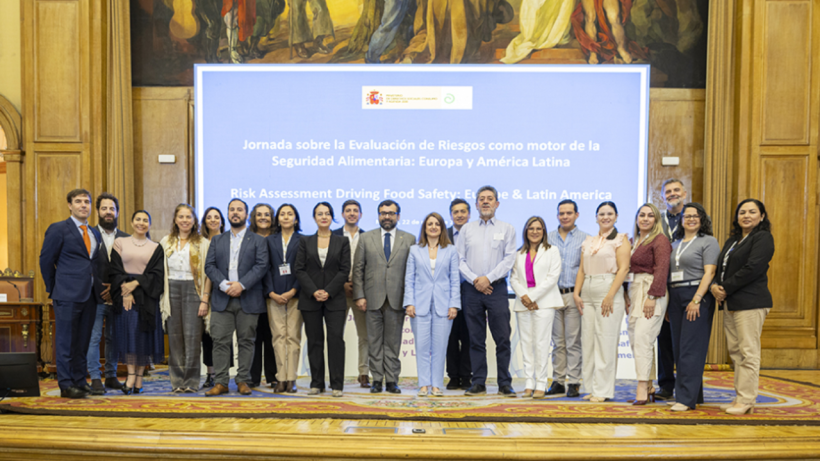
Representatives from eight Latin American countries met in Madrid from May 18 to 22, 2026, to review the official control systems, risk assessments, and maximum residue limits (MRLs) applicable to food of animal origin destined for the European Union. The event was organized by the Spanish Agency for Food Safety and Nutrition (AESAN) with financial support from the Development Bank of Latin America and the Caribbean (CAF).
This exchange is particularly important for the regional swine industry as several of the participating countries consider the European Union one of their primary export markets, where testing for biological and pharmaceutical residues is a key requirement for market access. Non-compliance with MRLs is a recurring cause of product rejections at the border and suspensions of sanitary approvals.

During the conference, each delegation presented an overview of its national food safety system, the agencies responsible for inspections, and the measures taken to comply with EU requirements. The agenda included sessions on risk assessment, interagency coordination, border controls, and sanitary alert mechanisms in place in Spain and the European Union.
As part of the practical agenda, participants visited the Regional Public Health Laboratory of the Community of Madrid and the Border Control Point at Adolfo Suárez Madrid-Barajas Airport, where they gained firsthand insight into the inspection procedures applied to goods entering the EU. The event coincided with the conference marking AESAN's 25th anniversary, which focused on science, cooperation, and food risk management.
May 26, 2026/ Ministry of Livestock, Agriculture, and Fisheries/ Uruguay.
https://www.gub.uy/ministerio-ganaderia-agricultura-pesca/