


























 0
0
Finishing pig operations seek to efficiently convert dietary nutrients into high-quality protein-rich pork. Efficient use of ingested protein is crucial, as it is one of the most expensive nutrients. However, its conversion into body protein is low, between 15% and 33% (Dourmad and Jondreville, 2007; Flachowsky and Kamphues, 2012), which generates significant nitrogen losses that increase feed costs and the environmental impact of production.
Traditionally, nutritional requirements are estimated using factorial methods, such as those proposed by FEDNA (de Blas C., 2013) or the NRC (2012). In conventional feeding systems, all pigs receive the same feed over long periods, the duration of which depends on the number of feeding phases. Since finishing pigs' appetites increase faster than their nutritional requirements, the optimal nutrient concentration in feed decreases over time. However, when we estimate pigs' individual needs, these vary considerably between individuals, as does their trajectory over time (Figure 1).

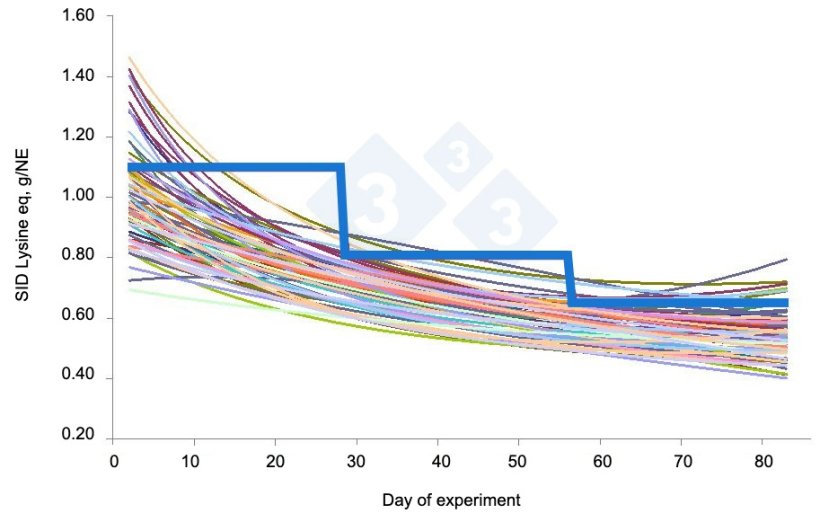
Figure 1. Estimated requirements for standardized digestible ileal lysine for individual pigs (colored lines) and minimum levels of standardized digestible ileal lysine provided to pigs fed in a conventional 3-phase group feeding system (thick blue line) without affecting body weight gain, according to Hauschild et al., 2012.
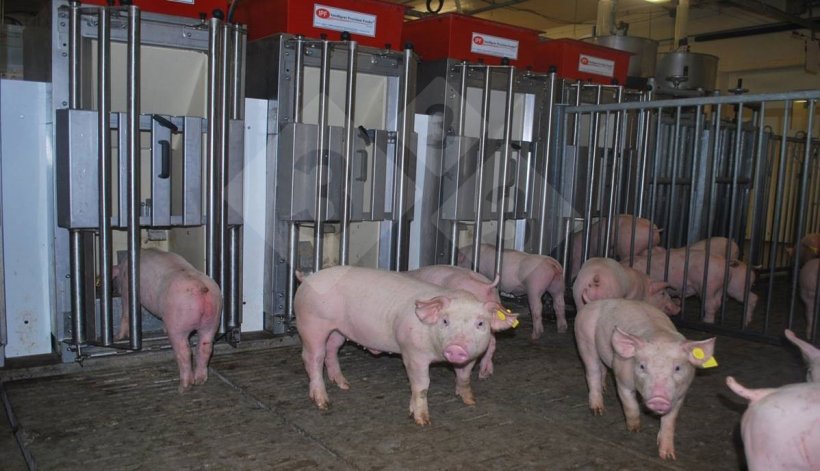
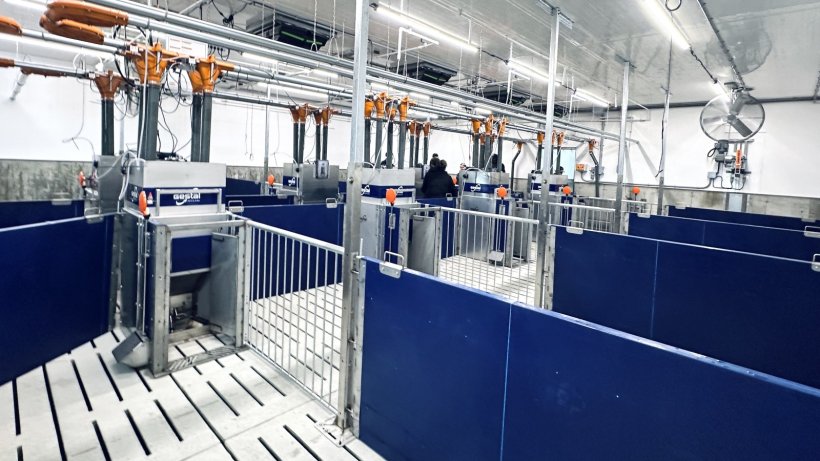
Individual precision feeding (IPF) seeks to provide each animal with the exact amount of nutrients required daily, estimating them in real time using a mathematical model (Hauschild et al., 2012). This model integrates daily intake and frequent body weight data, thus predicting weight gain and future consumption. With these predictions, the concentration of lysine and other nutrients is adjusted individually on a daily basis. Precision feeders identify each pig with an RFID transponder and provide each animal with the nutrients it needs on a daily basis by mixing two feeds in a personalized way, one with a high concentration of nutrients and the other with a very low concentration (Photo 1).
Studies comparing IPF with conventional feeding have shown significant improvements in nutritional efficiency. Although average daily gain and protein deposition remained similar, IPF reduced standardized ileal digestible (SID) lysine intake by 26% and crude protein intake by 16%, which decreased costs by 10% and reduced nitrogen excretion by 30% (Andretta et al., 2014; Andretta et al., 2016). Similar results have been obtained recently (Llorens et al., 2025). In addition, by reducing nitrogen and phosphorus excretion, IPF decreased environmental impact. Under Quebec's conditions, where feed ingredients are local, IPF reduced CO2 equivalent emissions by 8% and decreased acidification and eutrophication potential by 16% (Llorens et al., 2024). Since more than half of CO2 eq. emissions come from the production of feed ingredients, the use of alternatives with a lower environmental footprint will further improve the sustainability of production.
A key approach to reducing environmental impact is to apply local solutions to global problems. While in Europe, the main source of CO2 emissions in pig production comes from the use of imported soybeans, in Quebec, it is corn that contributes most to these emissions. A promising alternative for reducing CO2 emissions in pig production is the use of alternative feedstuffs that have a low environmental impact. Thus, in Quebec, we recently evaluated the effect of including up to 22% timothy grass (Phleum pratense, Photo 2) in finishing diets for finishing pigs. Pigs fed the forage-supplemented feed finished with the same amount of body protein as conventionally fed pigs, but with 22% less fat (Figure 2) after reducing corn consumption by 24% and soybean consumption by 32% (Llorens et al., 2025).
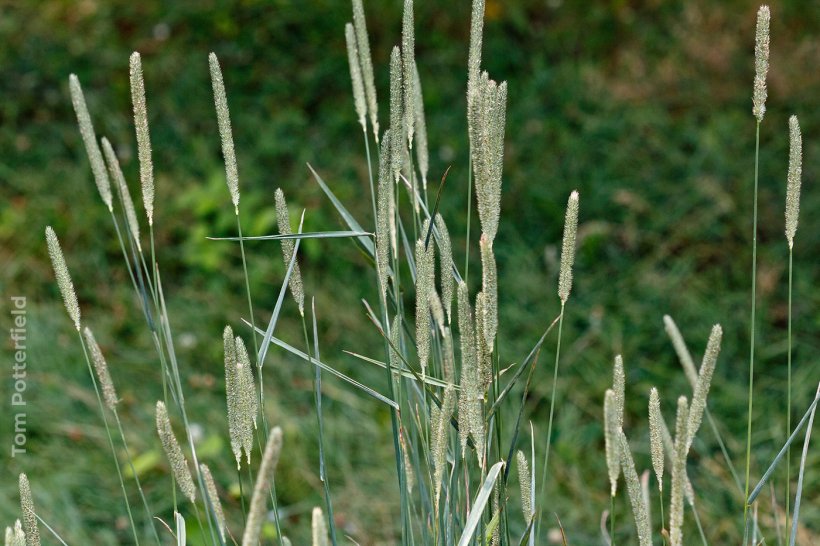
Photo 2. Phleum pratense, photo by Tom Potterfield.
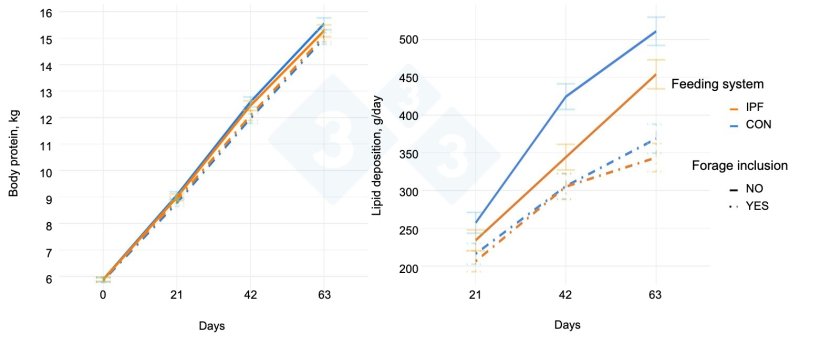
Figure 2. Body protein content and lipid deposition according to the inclusion of Phleum pratense (forage inclusion, NO, YES = gradual inclusion 8-22%) and feeding system (CON = group phase feeding, IPF = individual precision feeding) over a 63-day experimental period, divided into three 21-day phases.
In conclusion, IPF is a transformative strategy for swine nutrition, offering a more sustainable and profitable alternative to conventional swine production systems. By accurately providing pigs with the nutrients they need in real time, IPF improves nutritional efficiency, reduces feed costs, and minimizes environmental impact. IPF facilitates the use of alternative feedstuffs, such as forages, agro-industrial by-products, and others, by delivering these feeds based on each animal's consumption and growth. With the growing focus on profitability and sustainability required of animal production, precision feeding is emerging as a key tool for modern swine production.