























 0
0
The year 2026 has stepped on the gas, and in just 62 days, we have seen news that we did not think possible (not to be discouraging, but just 61 days ago, we were all ready to celebrate the end of the year, drinks in hand!)
After the “surgical operation” in Venezuela, we see how Israel has managed to impose its thesis of the imminent danger that Iran represents for the Israeli state and the United States. Both countries have begun a military operation in the region that, within a few hours, spread to countries across the Middle East. Not only did U.S. intelligence manage to decapitate the regime by locating Khamenei and eliminating him in the first hours of the conflict, but we have also seen the Iranian response, bombing global symbols of stability and luxury such as the Burj Al Arab in Dubai.

What was initially presented as a quick operation is beginning to look much longer than originally expected as the hours and days pass. In three to four weeks, we’ll see. The result? Stock markets falling, oil rising, gas prices surging, and one of the nerve centers of global trade brought to a standstill. Let’s take it step by step.
- Iran: It is a major oil producer, one of the most important in OPEC behind Saudi Arabia and Iraq. It also produces gas and has a significant chemical industry (methanol, urea, ammonia, etc.), and it is also a major producer of fruits and nuts, among other products. Today, Iran has prohibited the export of fruit and nuts, agricultural products, and food in general, putting pressure on the market. Gas prices have increased more than 60% after QatarEnergy announced the suspension of production in Ras Laffan. To put this into context, Qatar exports 20% of the world’s liquefied natural gas. In short, Iran is key for many countries in supplying vital products ranging from oil to fruit.
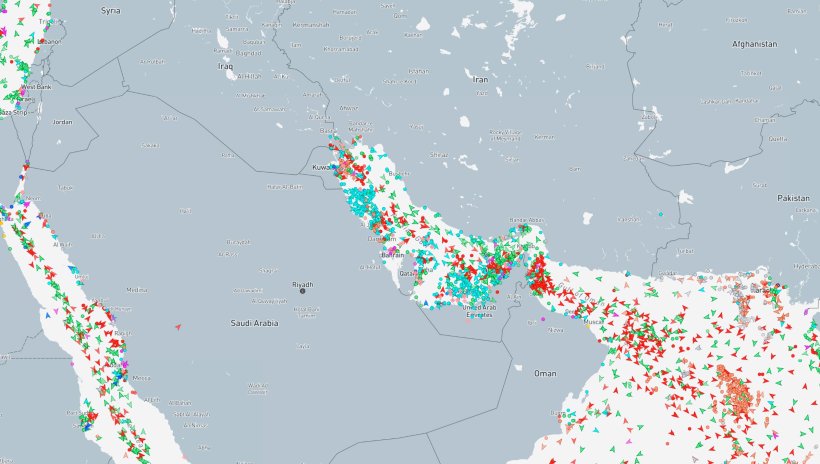
Maritime traffic in the Strait of Hormuz. Source: MarineTraffic.com
- Strait of Hormuz: closed to maritime traffic. Iran has threatened to attack any ship attempting to cross the strait, except those flying the Chinese flag. This is one of the most important channels for global trade; approximately 20% of the world’s oil and gas trade passes through its waters. It is also important to consider the response of ship insurers, which, since Saturday, have been applying war clauses to vessels operating in the Gulf. This significantly increases the cost of goods and raises the level of risk. Another point: at the opposite end of the Arabian Peninsula lies another strait of vital importance to global trade, Bab el-Mandeb (“Gate of Tears”), where, since 2023, Houthi rebels have systematically attacked ships, claiming solidarity with the Palestinian people. The Houthis follow the Shia branch of Islam, like Iran (while the other neighboring countries are Sunni), and together with Hezbollah and Hamas formed the self-proclaimed “Axis of Resistance". For now, there has been no news of problems in the Mandeb Strait, but let us hope it does not live up to its name.
- Fertilizers: prices have risen considerably over the past two days amid a scenario of supply crisis. Around 45% of the world’s urea trade passes through the Strait of Hormuz (Iran is a major producer), as well as 25% of nitrogen-based fertilizers. The rise in fertilizer prices puts global cereal and oilseed production at risk. Higher prices weigh on demand, thereby reducing production levels worldwide.
- Freight rates (the cost of moving ships) are rising as a result of everything mentioned above. Navigation risks, the price of oil, and the geopolitical crisis all create a premium in shipping costs, leading to higher prices for all goods. If the offensive and the destabilization in the region last the three or four weeks that Trump mentioned yesterday, we could see a significant rebound in global inflation. This would mean that central banks will have to raise interest rates (or at least not lower them as was expected the FED would do) in order to control the widespread rise in prices.
- Euro–dollar: With all this turmoil, it has moved from trading at 1.1823 last Friday to 1.1575 today. This strengthening of the dollar leads to higher prices for the cereals and soybeans that we import into Europe (as well as all other products) and makes U.S. origins more expensive. If the United States has already had difficulties since last year selling soybeans and corn due to the trade war, the stronger dollar further undermines producers already in a very precarious economic situation because of low cereal and soybean prices. We will see whether China continues to honor the soybean purchases agreed with the United States or instead prioritizes South American origins.
-
Wheat: weeks ago, when the futures price again touched €187.5/t, funds closed out short positions, pushing futures higher and, consequently, the price of the physical product as well. This escalation in the Middle East is now supporting new-crop futures above €207.5/t
The question is: what do we do now? As we have mentioned, this season does not appear likely to be short, and the consequences of the generalized rise in prices will grow the longer the conflict and disruptions to global trade last. That means, once again, that when market prices are low, purchasing decisions need to be made. Throughout 2026, corn has traded around €210/t for forward positions, wheat around €216/t for new-crop positions, and soybeans around €315/t for the entire year. In short, the market has offered buying opportunities, but at the local level, doubts about pig prices—due to the appearance of African swine fever in the Barcelona area and declining consumption—have discouraged purchases by meat producers. Locally, in Spain, the continuous rains and storms that have been with us since September are starting to worry farmers. Spring will begin shortly, and that is when we will start to clear up these uncertainties.
As if that were not enough, at the time of writing, Trump has threatened Spain with cutting off any trade relations following Prime Minister Pedro Sánchez’s refusal to allow the United States to use the Rota and Morón bases for the American offensive against Iran.
Now comes the hardest part: waiting to see whether things return to normal, or whether the market has already incorporated the conflict risk premium into prices and will no longer react upward to every piece of news, as happened during the war in Ukraine—where, let us not forget, the bombings continue and it remains a sword of Damocles over the global grain trade. But for that, much more will still have to be written.