

























 1
1
In recent years, increasing attention has been given to pig welfare, as both consumers and producers strive for higher standards in animal care. Among the welfare issues in pig farming, a condition called Porcine Ear Necrosis (PEN) continues to pose a significant challenge. This condition affects pigs during both the nursery and fattening phases and is characterized by lesions on the ear auricle. Lesions typically begin as dry crusts on the tip or as wounds at the ear base, but they can worsen into moist, bloody sores that may lead to partial loss of ear tissue. However, originally described in 1984 as "porcine necrotic ear syndrome," the term was intended to be temporary until its etiology and pathogenesis were clarified.
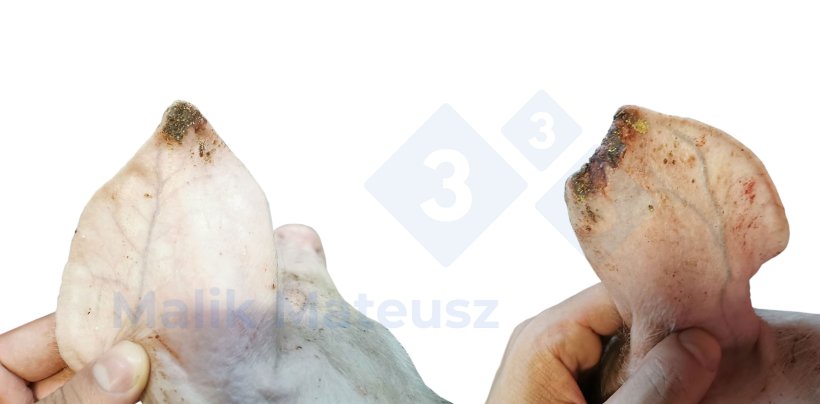

Although Porcine Ear Necrosis (PEN) has a significant impact on pig welfare, its exact cause and pathophysiology remained uncertain for a long time.
Suggested contributors included: skin and systemic infections, deposition of immune complexes in small ear veins, mycotoxins in feed, and ear biting, but no conclusive evidence has been established over the years.
PEN is generally regarded as a multifactorial condition, likely shaped by:
- Biting
- Skin trauma
- High stocking density
- Heat and/or high humidity
- Wrong diet composition
Its complexity, combined with limited research, has hindered a comprehensive understanding, and even four decades after its first official description, PEN remained incompletely explained. Therefore, in an effort to advance this understanding, three extensive field studies were conducted on Belgian pig farms starting in 2019, forming the basis of my doctoral thesis.
This research included a wide-ranging investigation:
- assessing PEN prevalence and lesion severity
- metagenomic analysis of pathogens in lesions, blood, and skin
- antibody and antigen testing
- mycotoxin analysis in feed and blood
- histological examination
- climate monitoring
- behavioral assessment (never donde before in relation to PEN).
This investigation of more than 6,000 nursery pigs (3–10 weeks old) on five farms revealed:
- Onset, prevalence, and severity of ear lesions varied between farms and even between pens within the same building compartment.
- Initial lesions were mild crusts, with wounds appearing later.
- Mild lesions did not affect pig growth during the nursery period.
- Lesion severity could differ between the left and right ear.
- Metagenomic analysis showed that the most common bacteria present in the lesions were:
- Staphylococcus, Streptococcus
- Mycoplasma hyopharyngis
- Fusobacterium
- Clostridium
- Prevotella
- Frequently detected viruses—astrovirus, picobirnavirus, rotavirus, and torovirus—were primarily enteric pathogens.
- PRRSV and PCV2 were absent or detected at very low levels in blood.
- Mycotoxin levels in feed and blood were low and showed no link to PEN.
- Histological examination revealed primarily superficial alterations.
- Behavioral evaluation showed that pigs frequently engaged in oral manipulation of pen-mates’ ears, with frequency varying over time. This behavior often occurred before visible lesions, and pigs in pens with high PEN prevalence exhibited more ear manipulation. Some farms also reported tail and flank lesions.
Although numerous pathogens were detected in lesion scrapings, most were also present on intact ears, suggesting that they are unlikely to play a role in early lesion development. Histological findings instead indicate that mechanical damage caused by oral manipulation, followed by secondary bacterial infection, is the most likely explanation for the clinical signs observed on farms. Nevertheless, the role of specific bacteria, particularly Fusobacterium necrophorum, in the etiopathology of PEN has recently been reported.
Nonetheless, we should not overlook the relatively rare cases of ear lesions seen in severely ill piglets, which may be associated with impaired blood circulation or underlying skin infections and might need more research attention.
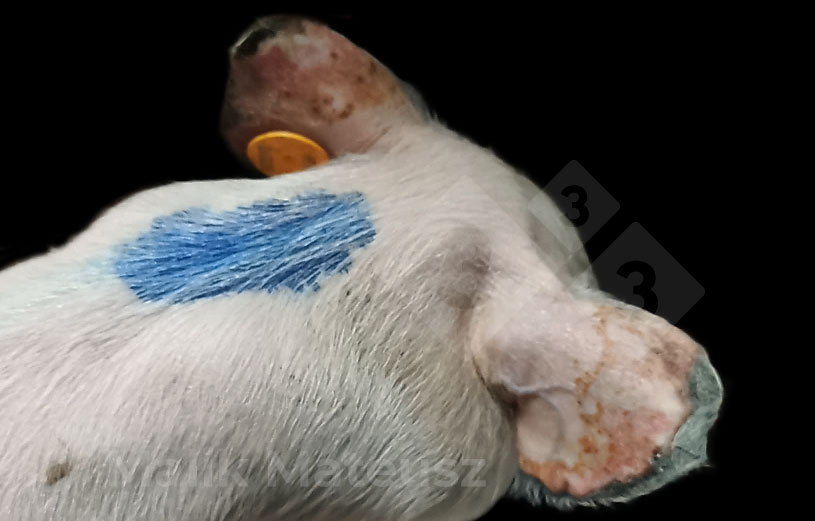
My study investigations, literature review and observations from my daily fieldwork lead me to conclude that lesions at the ear tip most often result from chewing, typically beginning as a small crust.
In contrast, lesions at the base of the ear usually occur during feeding. When pigs lower their heads to the feeder, the base of the ear becomes exposed and can be bitten from behind.
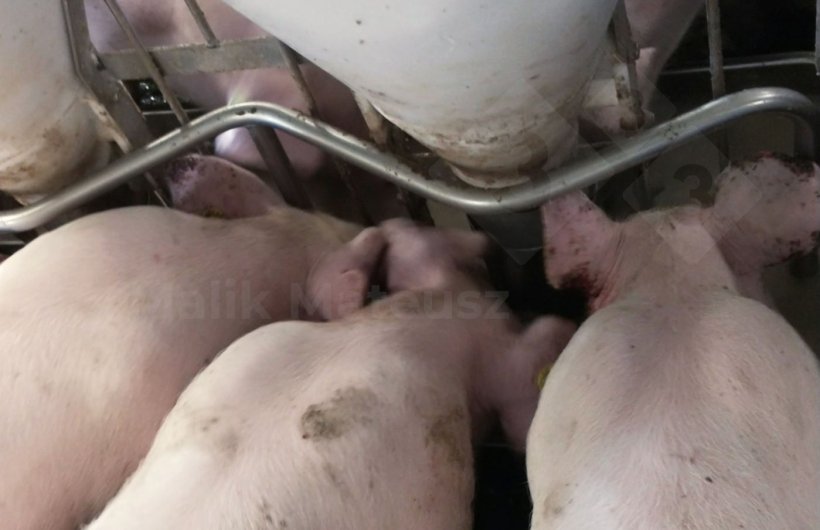
This type of biting may occur when feeding space is limited or when feed supply is inconsistent. Speculatively, such feeder-related aggression may persist into the early fattening phase if similar problems were already present during the nursery period. It is not uncommon for weaner pigs imported to Polish fattening farms to arrive with ear lesions, either fresh or healed; these lesions typically resolve within three weeks. However, in some individual pens, the problem may persist for a longer period.
The treatment with antimicrobials may provide an apparent benefit, as the frequency of manipulative behavior often decreases naturally within 2–3 weeks, allowing lesions to dry. However, severe cases may require medication to avoid complications such as lung abscesses from bacterial spread.
To reduce this negative behaviour, the environment should be adapted to encourage animals to interact with their surroundings rather than with the body parts of their pen-mates, although this can be challenging under modern intensive farming conditions. Nevertheless, additional research is required to clarify the causes of oral manipulations, to elucidate the role of secondary bacterial skin infections, and to establish effective control and prevention strategies.
However, the results of short-term investigations should be interpreted with caution, as the prevalence of pig with ear lesions is highly variable.
Summary
Behavioral observations indicated that oral manipulations frequently precede the appearance of visible lesions and occur more often in pens where pigs subsequently develop a higher number of ear lesions.
Early lesions at the ear tip typically result from chewing behavior, whereas lesions at the ear base appear to be more closely associated with feeder-related biting
Mild lesions generally do not impair growth performance, and manipulative behaviors often decline spontaneously within a few weeks. Pathogens identified in lesion scrapings were also detected on clinically healthy ears, supporting the view that bacteria act as secondary rather than primary contributors. In contrast, severe cases may require antimicrobial treatment to prevent complications. Overall, the term “ear necrosis” may be misleading, as these lesions are predominantly driven by behavioral factors rather than true necrotic processes.