

























 2
2
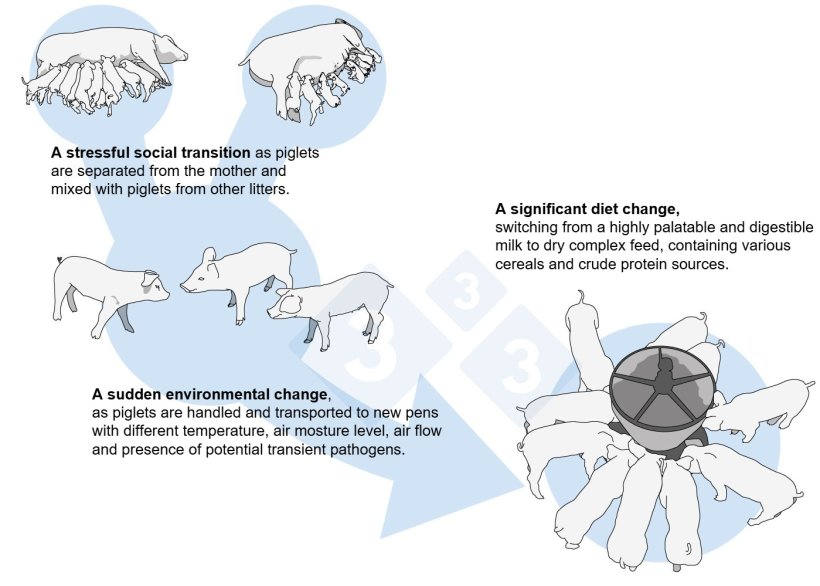
The first week after weaning has long been one of the most critical periods in swine production. Piglets face abrupt changes in diet, microbial exposure and social interactions, while their digestive and immune systems are still immature (Fig. 1). Historically, antimicrobial compounds and high doses of zinc oxide helped buffer this transition. With increasing regulatory pressure to reduce pharmacological interventions, producers are exploring natural, evidence-based strategies to support post-weaning performance.

An integrated toolbox approach
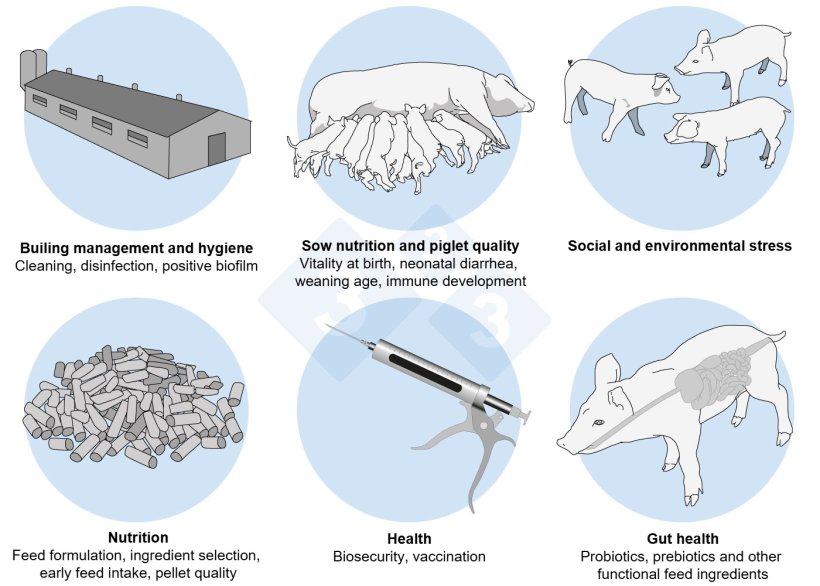
The latest advances in swine production suggest a holistic approach to address the multifactorial challenge of post-weaning (Fig 2).
Rethinking hygiene: from clean environment to stable microbial ecosystems
Standard cleaning and disinfection protocols remove pathogens but also eliminate beneficial microbes, creating ecological vacuums that opportunistic bacteria such as E. coli and Clostridium species can quickly colonize. Swine researchers have added a complementary step to hygiene protocols: applying a specific blend of highly concentrated bacteria (Bacillus spp. and lactic acid bacteria) to farm surfaces after cleaning and disinfection, promoting the formation of a beneficial biofilm on building surfaces. Once applied, these organisms form a positive biofilm—a thin microbial layer that occupies available surfaces, making it harder for pathogens to attach and multiply.
Field trials have shown that such biofilm approaches contribute to maintaining a safe microbial environment in the farm building, which in turn benefits animal performance and health, reducing mortality during the vulnerable post-weaning period.
Building resilience before weaning
Maternal microbial communities influence offspring gut microbiota, immune development and long-term growth outcomes.
Evidence shows that modulating the sow's diet and gut microbiota during gestation and lactation can improve colostrum quality, promote beneficial early microbial colonization (Achard et al., 2019) and help reduce neonatal diarrhea incidence. Combined with adequate birth weight, optimal weaning age and structured vaccination, these foundational measures help piglets cope with the abrupt transition from milk to solid feed.
Early exposure to solid feed before weaning—commonly referred to as creep feeding —encourages voluntary intake and facilitates adaptation to post-weaning diets (Huting et al., 2021). This pre-weaning preparation reduces the temporary anorexia that often exacerbates digestive stress immediately after weaning.
A Belgian study integrating gut health support
One of the most consistent challenges during weaning is controlling intestinal inflammation.
In a recent Belgian trial (May-June 2025), involving 447 piglets over 49 days, researchers tested the approach on microbial strategies that support gut health and performance with promising results.
Piglets supplemented with the well-documented probiotic yeast strain Saccharomyces cerevisiae var. boulardii CNCM I-1079 showed reduced levels of fecal calprotectin and salivary haptoglobin, two key inflammation biomarkers. These results indicated lowered intestinal inflammation and improved gut barrier function. The trial also reported significant improvements in feed conversion ratio, final body weight and average daily gain, with a double-digit return on investment.
The mechanism involves supporting intestinal structure and microbial balance during critical growth phases. As regulations tighten and consumers demand safer, more sustainable food, strategies that work with natural microbiota offer a practical way forward:
- supporting animal health
- improving performance
- and meeting market expectations
As a science-proven result, it is positive that nutrition can help piglets thrive and remain more resilient against post-weaning dysbiosis.
Precision nutrition: matching feed to digestive capacity
During weaning, the piglet's digestive system is still developing. Stomach acid production is inconsistent, small intestine enzymatic activity is suboptimal and the gut barrier remains fragile. When undigested proteins reach the hindgut, they may fuel undesirable fermentation and pathogen growth.
Precision matters here. Hydrolyzed yeast-based ingredients rich in small peptides and highly digestible amino acids offer nutrients in forms that immature digestive systems can absorb more efficiently. Recent trials have also shown that such ingredients can increase feed intake by 17% during the first critical week of post-weaning (Bravo de Laguna et al., 2025).
Fermentable fibers play an essential role in shaping hindgut microbial ecosystems.
When balanced correctly, these fibers encourage growth of fibrolytic bacteria and stimulate production of short-chain fatty acids (SCFAs) like butyrate and acetate. These metabolites fuel intestinal cells, reinforce barrier integrity and support immune homeostasis - creating conditions that favor beneficial microbes over pathogens.
Managing oxidative stress
Beyond digestive challenges, weaning triggers physiological stress responses. Viral infections and social disruption can trigger oxidative stress—an imbalance between free radicals and antioxidant defenses—that weakens immunity, increases inflammation and slows recovery.
Selenium-enriched yeast and natural sources of superoxide dismutase (SOD), a key antioxidant enzyme, can help buffer these critical periods. Research has demonstrated reduction in mortality and better zootechnical performance in trials conducted under heat stress challenge and viral pressure, helping piglets when they are most vulnerable (Bravo de Laguna et al., 2025).
Conclusion
This holistic approach reflects a broader paradigm shift in livestock production, moving from chemical reliance toward strategies that leverage natural microbiota and physiological processes. Producers are now focusing on vaccination, stronger biosecurity and nutrition strategies that work with natural gut microbiota. By building resilience through science-based approaches, farms can keep piglets healthy, improve performance and meet both regulatory and market expectations.