

























 0
0
Gut microbiota and the immune system
Intestinal immunity plays a central role in maintaining the health of pigs. In gnotobiotic animals, the intestinal immune system is underdeveloped, with deficiencies in mucus production, antimicrobial peptides, and the presence of components such as antibodies and T cells (Gewirtz et al., 2001). The presence of microbiota associated with the intestinal mucosa is crucial for immune modulation and maturation (Mulder et al., 2011; Arpaia et al., 2013; Belkaid & Hand, 2014), since most of the genes that influence the microbiome are related to the immune system. The host's immune elements actively select microorganisms in the intestinal lumen, shaping a beneficial microbiota (Honda; Littman, 2016).
In addition, commensal microorganisms can:

- metabolize food toxins
- synthesize vitamins
- promote the maturation of intestinal epithelial cells
- and reinforce barrier function, favoring immune homeostasis.
(Kabat; Srinivasan; Maloy, 2014; Yang et al., 2016; Li et al., 2018; De Vries; Smidt, 2020).
Mechanisms of tolerance and response to the gut microbiome
The growing recognition of gut microbiota as a determining factor in pig performance has led to advances in the study of its mechanisms of interaction with immunity (Duarte; Kim, 2022). Modulation of the microbiome directly impacts the development of immunity and intestinal functions (Chen et al., 2018; Li et al., 2018). Bacterial density increases throughout the gastrointestinal tract, and the immune system needs to distinguish pathogenic microorganisms from commensal or harmless ones (Stokes, 2017). This selective tolerance is essential to avoid unnecessary inflammatory reactions, preserving mucosal integrity (Brown; Sadarangani; Finlay, 2013; Mowat, 2018). For these reasons, the intestinal immune system uses different mechanisms against the microbiome to ensure its homeostasis (Figure 1):
Tight junctions are fundamental structures in restricting transepithelial permeability. Signals derived from microorganisms strengthen this barrier by inducing positive regulation of its components between enterocytes and modification of cytoskeletal proteins (Bansal et al., 2010).
Antimicrobial peptides (AMPs) also interact with the microbiota, contributing to its modulation and promoting the elimination of commensal bacteria near the epithelium (Macpherson; Uhr, 2004; Hooper; Littman; Macpherson, 2012).
The expression of pattern recognition receptors (PRRs) is essential for intestinal homeostasis. They detect MAMPs (microbial-associated molecular patterns) and regulate the production of mucin, AMPs, IgA, cytokines, as well as the maintenance of tight junctions and epithelial proliferation. These ligands are not unique to pathogens and are widely produced by commensal microbiota during healthy colonization (Brown; Sadarangani; Finlay, 2013; Chu; Mazmanian, 2013).
Toll-like receptors (TLRs) recognize conserved molecular patterns shared by large groups of bacteria and other intestinal microorganisms (Shi et al., 2017). Studies have suggested that TLRs are strategically expressed in the basolateral region of intestinal epithelial cells so that they are not exposed to the microbiota in the lumen. However, new findings have revealed that TLRs are also expressed apically. Thus, even if there is a failure to recognize these microorganisms, innate immune cells will be ready to act (Kayisoglu et al., 2020; Schären; Hapfelmeier, 2021).
Intestinal macrophages also play an essential role in tolerance to commensal microbiota. They express a phenotype that is hypo-responsive to TLR ligands, with low expression of co-stimulatory molecules (CD40, CD80, CD86) and high production of IL-10 (anti-inflammatory capacity), in addition to reduced synthesis of pro-inflammatory cytokines and nitric oxide. This promotes balance between effector Th lymphocytes and regulatory T cells, sustaining homeostasis (Lopes; Mosser; Gonçalves, 2020).
Despite the innate barriers between microbiota and epithelium, dendritic cells actively participate in immune regulation. They project dendrites across the intestinal barrier to capture microorganisms in the lumen (Brown; Sadarangani; Finlay, 2013; Shi et al., 2017), promoting the production of secretory IgA and regulating the immune response (Gonçalves et al., 2016; Zheng; Liwinski; Elina, 2020).
Commensal microorganisms occasionally cross the mucus layer in the small intestine (Ermund et al., 2013). In such cases, they are presented to B and T lymphocytes by dendritic cells, inducing IgA production (Chen et al., 2021). These lymphocytes are also subject to tolerance mechanisms, as they express specific receptors for microbial antigens (Bailey et al., 2005). Finally, the relationship between IgA and microbiota is mutualistic: a diverse and well-regulated repertoire of IgA contributes to the maintenance of a balanced microbiome (Gutzeit; Magri; Cerutti, 2014; Kawamoto et al., 2014).
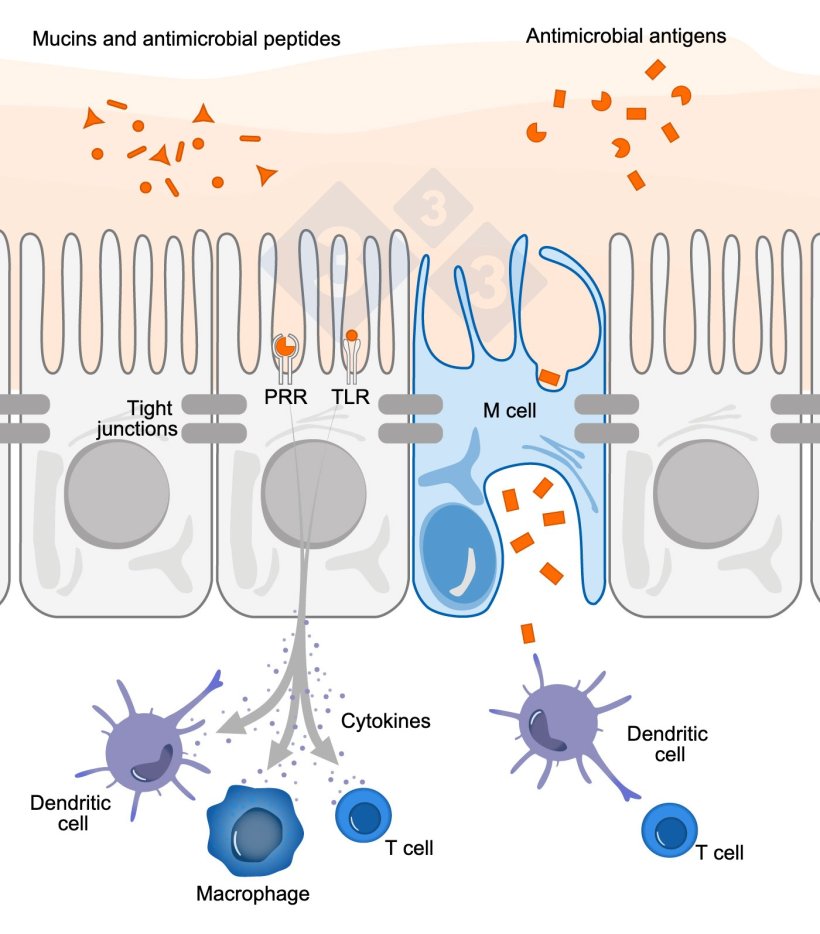
Figure 1. Schematic diagram illustrating the mechanism of action of intestinal immune cells in response to external threats.
Conclusion
Intestinal immunity is a complex system composed of physical barriers, immune cells, receptors, and microbiota. When in balance, it protects against pathogens and promotes pig performance. However, factors such as stress, early weaning, and infections can compromise this defense, leading to inflammation and production losses. Understanding the complexity of intestinal immunity and seeking strategies to preserve it is essential for efficient, profitable, and sustainable production.