
























 0
0
The German pig market noticeably lost tension in February 2026 while at the same time gaining confidence. What had still been characterized at the beginning of the year by backlogs, high slaughter numbers and rather cautious demand gradually developed over the course of the month into an increasingly balanced market situation. Sentiment remained sober, but beneath the surface there were clear signs of stabilization.
Prices: Signs of a trend reversal
In the slaughter pig segment, supply initially remained extensive. Weekly slaughter numbers were significantly above the previous year’s level, while average slaughter weights continued to decline steadily. This decline was more than just a statistical side note. Many market participants saw it as clear evidence that the backlog was genuinely being reduced. While the producer price stood at €1.45 at the beginning of the month and remained at that level for several weeks, market dynamics increased as February progressed. Marketing processes became smoother, regional differences lost importance and supply pressure eased noticeably.
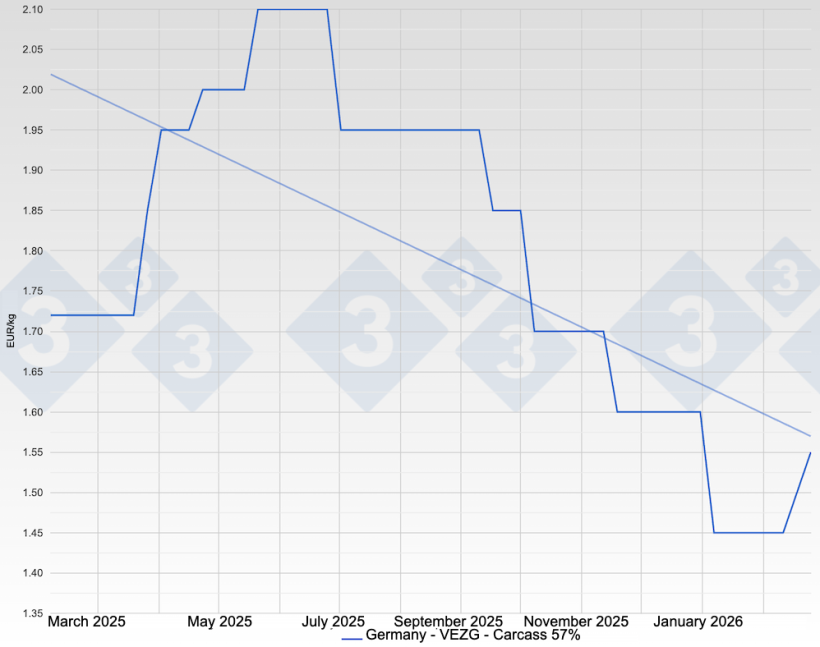

In the second half of the month, this easing was also reflected in trading platforms. Batches were marketed more quickly, buying interest increased and average proceeds moved clearly toward the upper end of the price range. By the end of the month, prices of up to €1.55 were achieved. Although the official benchmark quotation remained unchanged, the underlying tone of the market had clearly strengthened. Meat trading remained seasonally challenging, yet the feared downward spiral did not materialize. Instead, signs accumulated that the market had passed its lowest point.
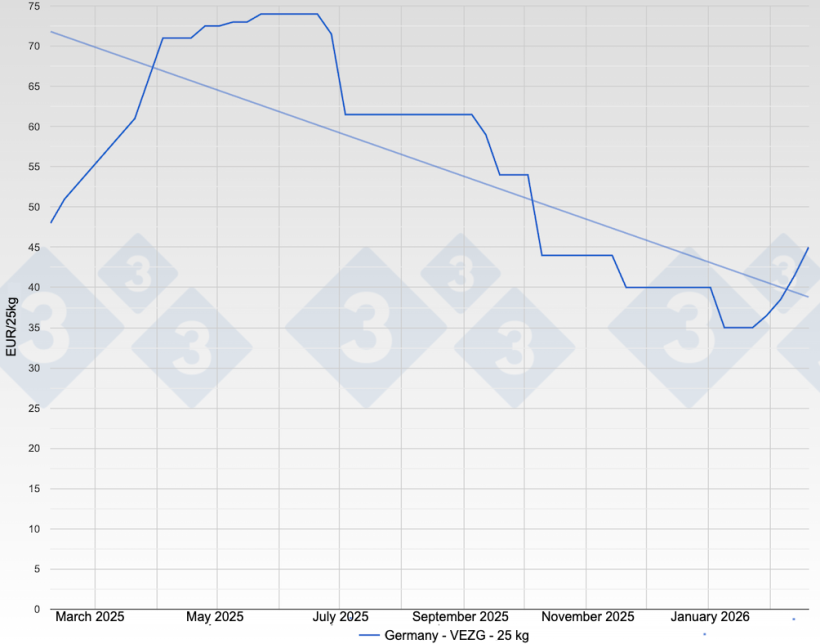
Developments were even more pronounced on the piglet market. Demand picked up noticeably at the beginning of the month. Piglets were placed more quickly and the previously stable price phase shifted into a period of continuous increases. The price for 25-kg piglets rose from €35.00 first to €36.50, then to €38.50 and most recently reached €45.00. This development underlined growing confidence in the future marketing of finished pigs. Lively markets and rising quotations were also reported from the Netherlands and Denmark, further supporting the positive sentiment. The piglet market thus acted as an early indicator of a more stable outlook along the entire production chain.
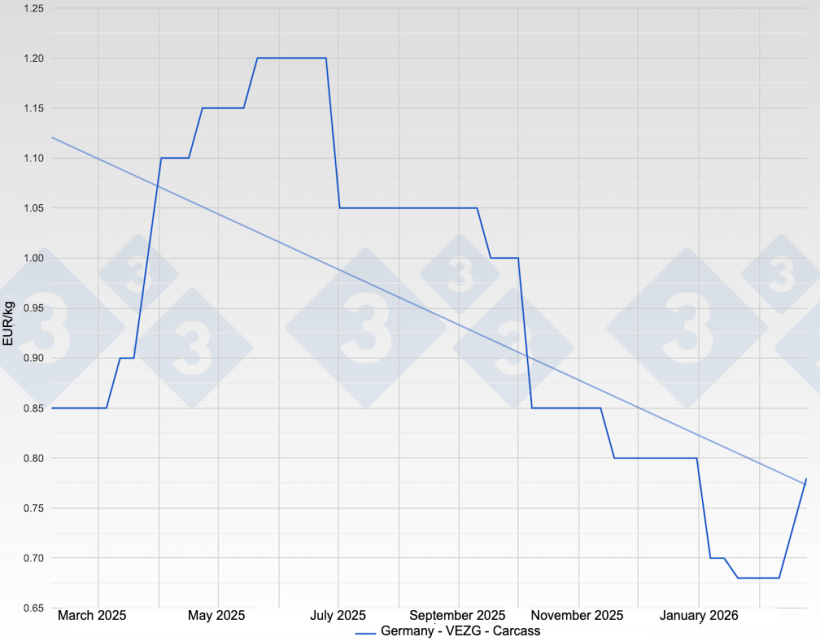
The slaughter sow market developed much more calmly. The VEZG price remained stable at €0.68 and recently increased to €0.73. After the heightened activity at the beginning of the year, supply normalized. Demand developed in a typically seasonal, calm but steady manner. Frozen stocks built up in January ensured adequate supply without exerting additional pressure on prices. As slaughter pig prices increased toward the end of the month, sow prices were also able to firm slightly.
Movement on the political and structural front
Particular attention was paid to the decision by North Rhine Westphalia to completely repeal its state fertilizer ordinance following a ruling by the Federal Administrative Court. For many farms, this initially meant greater legal clarity. At the same time, the federal government is now required to establish a new, legally secure framework for the designation of restricted areas. For pig producers, such regulatory conditions are far from abstract, as they directly affect production costs, land management and investment planning.
On a structural level, the announced takeover of sausage manufacturer Hein by the Goldschmaus Group also attracted attention. Goldschmaus is further advancing its vertical integration strategy and expanding its value chain. In a market environment that has been shaped for years by margin pressure, rising requirements and intense competition, such consolidations reflect ongoing structural change. For producers, this may open up new and more stable marketing channels, while at the same time increasing the market power of larger players.
Changes are also emerging within industry programs. Planned adjustments within the “Initiative Tierwohl”, particularly the future mandatory traceability along the entire production chain, are already casting their shadow. From 2027 onwards, remuneration is to become more market oriented. For piglet producers and finishers, this means reviewing supply relationships and contract structures even more carefully and aligning them strategically.
Foreign trade: a key influencing factor for market developments
Although German pork exports in 2025 remained largely stable and were slightly above the previous year’s level, the structure of sales markets changed considerably. Around 85 percent of exports remained within the European Union. Italy strengthened its position as the most important buyer with significantly higher volumes, followed by the Netherlands and Poland. In this environment marked by uncertainty, intra EU trade once again proved to be a stabilizing pillar.
The situation in Spain also had a significant impact on the European market. After African swine fever was detected in wild boar near Barcelona, trade restrictions meant that larger volumes of Spanish pork could not be exported to third countries as planned. Instead, this meat increasingly entered the European internal market. The additional supply substantially intensified competitive pressure within the EU. In several countries, Spanish volumes met already well supplied markets, dampening price development and putting pressure on margins along the supply chain.
At the same time, new international perspectives emerged. The Philippines introduced new pork import regulations that, for the first time, provide for a regionalization concept in connection with African swine fever. In principle, this recognizes that exports from ASF- free regions may be possible even if cases occur in other parts of a country. For Germany, this does not yet mean immediate market access, but it does create a legal framework for future deliveries. In the medium term, this could open an additional sales channel and contribute to relieving pressure on the European internal market.
A cautiously optimistic outlook
Against this backdrop, the outlook remains cautiously optimistic. The clear reduction of backlogs, declining slaughter weights and a more dynamic piglet market point toward a stable to firmer development. The key question will be whether seasonal meat demand strengthens as spring approaches and whether international trade flows continue to normalize. Structural and political framework conditions remain a source of uncertainty. Nevertheless, February demonstrated that the market is gradually working its way out of a phase of tension. The sector is regaining confidence that the balance between supply and demand will continue to stabilize, thereby improving the economic prospects for producers in a sustainable way.