Technical sheets of the main raw materials and additives used in swine feed. They include a comparison of nutritional values from various sources, product
Use this tool to diagnose problems with the feed conversion ratio. Click on the flowchart or on the buttons within the text to navigate through the different parts of the tool.
Use this tool to find out why your farrowing rate is less than ideal. Click on the flowchart or on the buttons found within the text to navigate through the different parts of the tool.
Use this tool to explore which slurry management strategy best fits your situation. Click on the flow chart or on the buttons within the text to navigate through the different parts of the tool.
Constructing a pig farm: Turnkey or put on a hard hat?
Making the right choice is not just a matter of cost, but also of strategic vision and risk management.
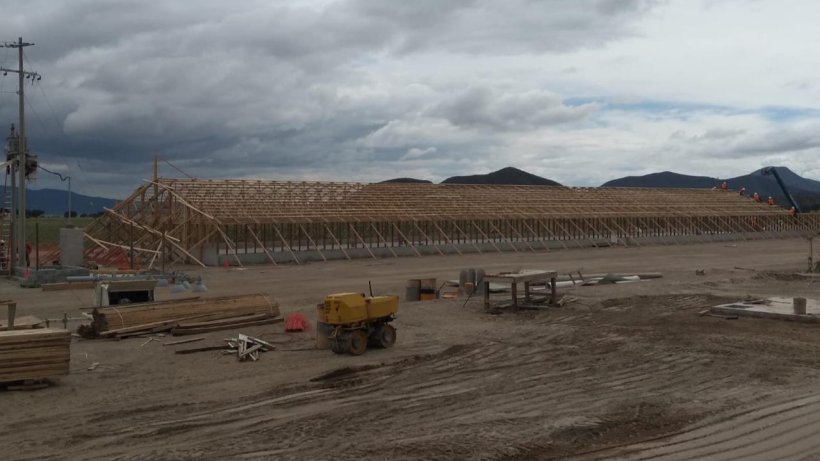
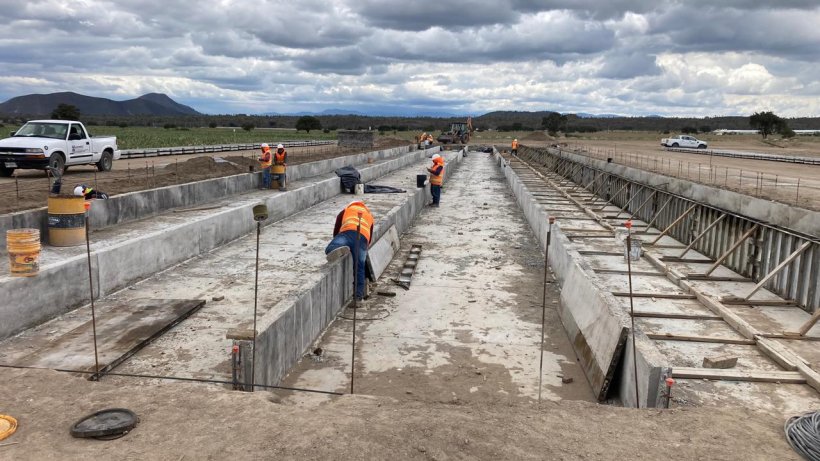
Deciding to build or modernize a pig farm is one of the most important decisions in the business. It will determine production efficiency, structural biosecurity, and, today, inevitably, the management of environmental and social impacts. At the end of the process, the facility will be received and operated by the producer, who assumes full responsibility before the authorities and the community. Analyzing the options available means doing so with this responsibility in mind.
Turnkey model: Delegating the execution, but not the responsibility
This model proposes delegating the execution of the project, but this should not be interpreted as delegating technical expertise or ultimate responsibility. The producer defines the requirements, and a specialized company handles the design, and in some cases, the permits, construction, and final delivery. The promise is “peace of mind,” usually associated with a premium cost, which is only justified if accompanied by rigorous technical validation.
Advantages and need for technical auditing
Specialized companies offer designs that seek to optimize the construction process, materials, and future operation, with the aim of improving production and health indicators. However, it should not be forgotten that they also operate according to their own logic of profitability.
Therefore, responsibility for construction defects and compliance with environmental regulations must be clearly established in the contract. Otherwise, the legal risk falls entirely on the producer, even if they have entrusted the execution to a third party.
For the turnkey model to work properly, the contract should stipulate that the contractor proposes the selection of critical equipment, such as feeders, heating systems, ventilation controllers, and drinkers, but that the final decision rests with the producer or their technical advisor. Likewise, dimensioning calculations for ventilation, feeding, and environmental management must be reviewed and validated by the client. Transparency in unit costs, totals per item, and, where possible, overheads and contingencies, is key to avoiding hidden cost overruns.
The producer knows which feeder has failed in the past, which heating system is best suited to their climate, and which fan brand has proven most durable. Paying for peace of mind does not mean giving up control over the elements that directly impact animal welfare and daily productivity. With this approach, the project ceases to be a “closed package” and becomes a specialized technical partnership.
Independent management of the construction process: Complete control, increased workload
“Putting on your hard hat” means taking on the role of an orchestra conductor. The producer controls every purchase, every subcontract, and every essential piece of equipment. The potential savings can be significant, but so are the workload and associated risks.
Critical advantages and the power of personalization
By managing the project yourself, you can decide where to invest more and where to make adjustments. You can prioritize, for example, better thermal insulation or a more robust slurry management system, based on your own experience and local conditions. Similarly, if you prefer a specific line of feeders or a proven environmental controller, the decision is straightforward and involves no intermediaries.
This approach allows you to precisely adapt to workflows, farm characteristics, geographic location, and staff technical capabilities. However, the potential savings come with greater risk exposure. The main danger is not only cost overruns, but also the fact that future operation depends on the correct integration between multiple suppliers. Errors such as inadequate slopes, poor drainage, or poor integration between electrical and ventilation systems can seriously compromise health and productive performance.
Choosing involves managing the balance between risk, knowledge, and economic convenience
The best option depends on the producer's ability to manage projects, their availability, and their technical structure. The ultimate responsibility for the farm will always lie with the owner of the operation. Whether execution is delegated or managed directly, the key is ongoing oversight and maintaining control over the essential technology that will determine day-to-day operations.
In any scenario, the producer remains legally and sanitarily responsible for execution errors, whose consequences may affect the operation for many years. Choosing well is not only a matter of cost, but of strategic vision and risk management.
Article Comments
This area is not intended to be a place to consult authors about their articles, but rather a place for open discussion among pig333.com users.
Leave a new Comment
Access restricted to 333 users. In order to post a comment you must be logged in.
























 0
0