

























 0
0
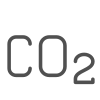
Slurry bioacidification is a promising approach to reduce ammonia (NH3) and greenhouse gas emissions (CH4, CO2) during manure storage.
Objective and methods: This study investigated the effectiveness of different bioacidification strategies by adding varying amounts of glucose, brown juice (a by-product of green protein biorefining), sulfuric acid, or a combination of these to pig slurry to maintain low pH over long-term storage to reduce emissions.

Results: Preacidification to pH 5.5 using sulfuric acid, as well as the addition of a high dose of brown juice (50%), effectively reduced and maintained pH during 42 days of storage, significantly reducing NH3 and CH4 emissions. A combination of preacidification to pH 6.5 to decrease the pH initially together with the addition of 50% of brown juice, which provides a large amount of C and lactic acid bacteria to promote self-acidification, was found to be a promising strategy to reduce NH3 and CH4 emissions.
Conclusion: This strategy will enhance environmental sustainability by reducing the need for sulfuric acid and carbon substrates to mitigate gaseous emissions from long-term manure storage. Further field studies are needed before bioacidification can be recommended as an alternative to traditional acidification methods.
Gómez-Muñoz B, Jensen LS, Regueiro I. Efficiency of different strategies for pig slurry bioacidification to reduce ammonia and greenhouse gas emissions during long term storage. Journal of Environmental Chemical Engineering, Volume 13, Issue 2, April 2025, 115825. https://doi.org/10.1016/j.jece.2025.115825
