






















 Company
Cargill Animal Nutrition and Health
United States
3
products
5
Publications
143
Followers
Company
Cargill Animal Nutrition and Health
United States
3
products
5
Publications
143
Followers
An integrated solutions approach to enhancing heat stress resilience in pigs


Effectively addressing this challenge requires an integrated approach that combines sound farm management, optimised nutrition, and targeted micronutrition solutions.
Several flagship products from Cargill ANH’s Micronutrition & Health Solutions portfolio provide support within its integrated solutions approach to mitigate heat stress. These include XPC, Cinergy Excel Max (previously known as Fresta F), and Proviox.
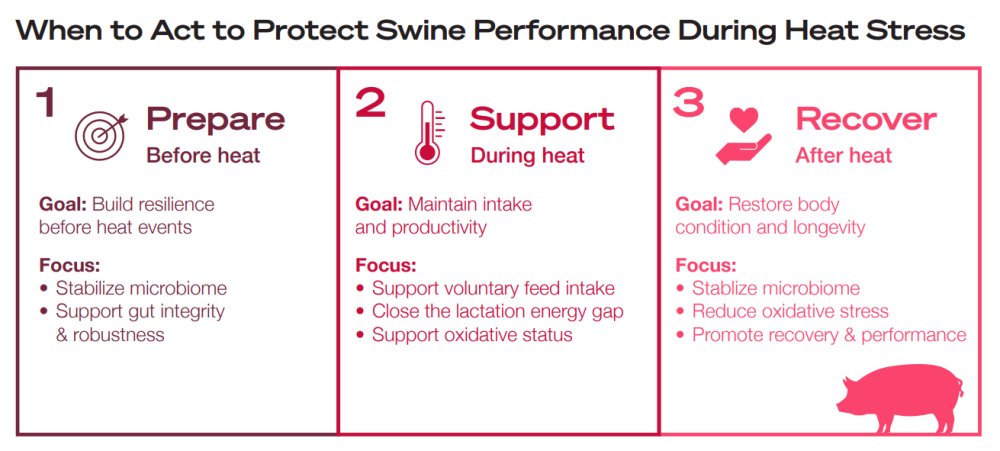
Recognizing that heat stress requires actions before, during, and after thermal challenge, product use focuses on, preparing, supporting and promoting recovery. By supporting the microbiome and gut robustness ahead of heat events and maintaining intake and oxidative stability under heat load, this approach helps sustain productivity and resilience. It also restores biological balance and performance afterward, supporting longevity through the heat stress cycle.
Supporting the gut microbiota before and during heat stress
When temperature and humidity remain high for extended periods, the sow’s gut becomes more fragile: microbial balance declines, the intestinal barrier weakens, and inflammation rises, diverting nutrients from production. XPC, a postbiotic with a broad spectrum of bioactive compounds, helps stabilize the maternal microbiome before, during, and after heat stress. Piglets from XPC-fed sows also show fecal profiles that better manage opportunistic bacteria at weaning, helping support gut microbial balance as heat begins.
XPC also helps reduce the physiological strain of heat stress. Supplemented sows show improved antioxidant status and more stable body temperature and respiration, resulting in more pigs weaned and heavier litters under hot conditions.
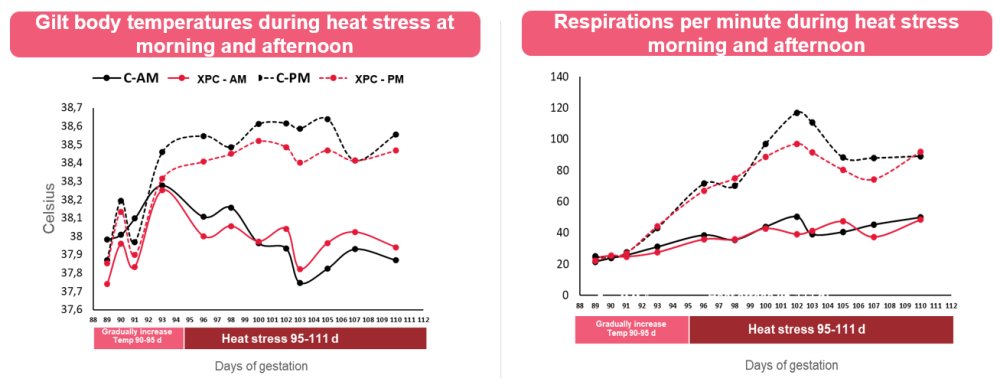
The evolution of body temperature (left) and respiratory rate (right) of sows exposed to a heat stress challenge and fed with a control feed or XPC supplemented feed (Hedrick et al., 2025).
Supporting feed intake when heat reduces appetite
When temperatures rise, lactating sows eat less to limit metabolic heat generation, just when milk production demands the most energy. This gap can affect sow body condition, litter growth, and the next reproductive cycle.
Cinergy Excel Max helps maintain feed intake during heat stress. Formulated with essential oils and flavonoids to support voluntary intake, it has shown an average 8% increase in feed intake across trials. Higher intake supports milk production, litter growth, and sow body reserves.
Field trials in the US showed that sows receiving Cinergy Excel Max consumed more feed under high temperature (up to +14%), weaned heavier litters with slightly more piglets (+0.55), and improved reproduction performance in next cycle’ (+0.6 piglets in the next cycle).
Nutritional program adjustment
A high-quality, balanced sow diet is essential for providing energy and amino acids for maintenance, fetus growth, and lactation. However, nutrient needs shift under heat stress, requiring an adjustment in the nutritional balance of the diet.
- Protein level and quality are critical. Excess or imbalanced protein increases heat production and energy waste and can promote unhealthy hindgut fermentation that irritates the intestine. Lower crude protein with balanced amino acids and high-quality sources are linked to higher litter gains and fewer losses in lactating sows, particularly during heat stress.
- Energy supply also needs adjustment. Diets that increase net energy while minimizing heat production, with moderate fat inclusion and more energy-dense carbohydrates (~100 kcal/kg increase), help maintain intake and performance in hot conditions.
- Fibre plays a dual role. Fermentable carbohydrates support gut health but also generate heat and dilute dietary energy. In lactating sows, slightly reducing the amounts of fermentable dietary fibre (by about 2-5%) can help sustain feed intake in warm environments.
- Heat stress alters acid-base balance. A moderate increase in Dietary Cation-Anion Difference (DCAD), for example, through feeding of sodium bicarbonate, can be an effective dietary approach in feeding sows during hot periods.
- Antioxidants and minerals matter too. Adequate vitamin E, vitamin C, and trace minerals such as Zn and Se help pigs cope with heat stress and support intestinal health.
Heat stress is a complex, multifactorial challenge that impacts sow health, welfare, fertility, and overall farm performance. Addressing it effectively requires more than a single intervention. It demands a comprehensive approach that prepares the sow before heat stress even begins,and should supporther during heat exposure, and ensure recovery when temperatures drop again.
Find out more about the consequences of heat stress for sow and offspring performance in our article by Maud Le Gall and Naiana Manzke.

Contact:
Contact us using the following form.