


























 0
0
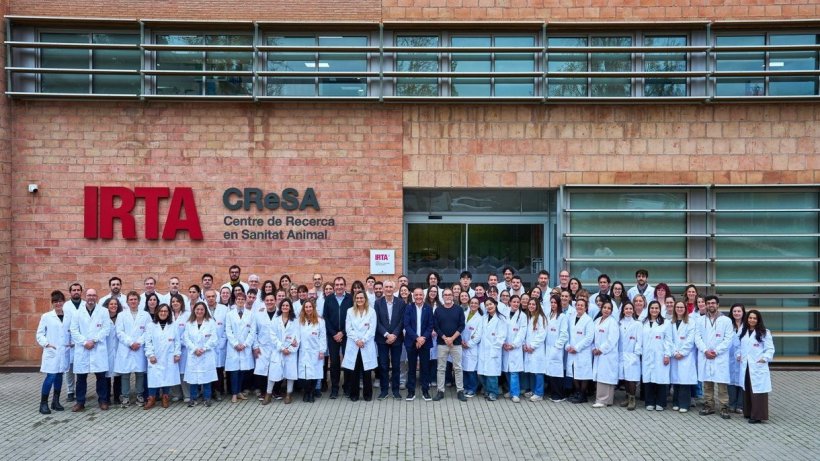
 The outbreak of African swine fever (ASF) detected in Collserola at the end of November did not originate at the Animal Health Research Centre of the Institute for Agrifood Research and Technology (IRTA-CReSA).
Scientific evidence confirms this: genetic sequencing of the pathogen that infected the animals found dead in the wild has been compared with the DNA of the strains used in the IRTA-CReSA biosecurity facilities, and they do not match in any case.

This is explained in the official report on the outbreak, released on 9 February by the Ministry of Agriculture, Fisheries and Food.
This report confirms the results announced on 30 December by the Department of Agriculture, Livestock, Fisheries and Food of the Regional Government of Catalonia, following sequencing carried out in parallel by the Institute for Research in Biomedicine (IRB).
‘We are pleased that this hypothesis has been ruled out and we continue to work to help contain the outbreak and contribute scientific knowledge to the management of this crisis,’ says IRTA Director General Josep Usall.
Usall considers that the findings of this document and those of all the audits carried out by the various investigative committees ‘reaffirm the high level of biosecurity and working capacity of our centre’.
He also highlights ‘the integrity, commitment and excellence of the more than 150 professionals who work at IRTA-CReSA’ and thanks them for ‘their impeccable work during what have been difficult weeks for our organisation’.
Usall also thanks the Generalitat, European institutions, agri-food sector organisations, audit committee members and all the experts who have expressed their confidence in IRTA-CReSA for their support.
Maximum collaboration and work that has not stopped
From the outset, IRTA-CReSA has been at the disposal of the competent authorities to help control the outbreak and provide all the information required for the ongoing investigations.
The centre’s professionals have worked intensively on collecting and analysing samples and detecting positive cases.
Specifically, as of this week, IRTA-CReSA has analysed more than a thousand samples, of which 155 have tested positive for ASF, and eighteen tonnes of meat related to the outbreak have been incinerated, the same amount that is usually incinerated in nine months.
In addition, IRTA-CReSA professionals work on analysing and processing data, which is shared daily with the Department of Agriculture. IRTA-CReSA’s Epidemiology and Risk Analysis Unit integrates all available data from different sources to provide insight into the evolution of the outbreak, simulate possible future scenarios and evaluate which actions have been effective in the field.
All this work directly involves around forty professionals. ‘These are very high levels of activity, which we have had to combine with the usual activity of our centre, where we work on a dozen lines of research and innovation,’ summarises Natàlia Majó, head of the IRTA-CReSA Animal Health programme and professor at the Autonomous University of Barcelona (UAB).
A study to learn more about the new virus
The available data indicate that the outbreak began between September and October, not later.
As for its origin, everything points to the fact that investigations should refocus on the introduction of contaminated food into the country.
At the same time, further research will be necessary to find genetic ancestors that will enable a link to be established between the new virus (from genetic group 29) and others previously reported.
“If the sequencing results had shown that the strain causing the outbreak was very similar to another strain from anywhere else in the world, we could speculate that it came from that geographical area; but, as this is not the case, it is very difficult to know. There are currently areas of the world where there are outbreaks of ASF, but it is not known which genetic group they belong to,” notes Joaquim Segalés, head of the Endemic Swine Viruses research line of the IRTA-CReSA Animal Health programme and professor at the UAB.
‘In order to make predictions about the behaviour and evolution of the virus, it is important to learn even more about it and conduct research based on all the data and samples we already have,’ adds Segalés.
For this reason, IRTA-CReSA will promote a study in the coming months on the degree of virulence, behaviour and transmissibility of the new ASF virus.
The centre also plans to organise a meeting this year with internationally renowned ASF experts.
A distinguished track record spanning more than two decades
IRTA-CReSA’s line of research into ASF forms part of the Animal Health programme and is internationally recognised.
In fact, IRTA-CReSA is one of the European centres with the longest scientific track record in ASF. It offers support and advice in health emergencies and conducts research into ASF virology and immunology through national and European research projects. It also works on vaccine development.
Since 2017, IRTA-CReSA has been a collaborating centre of the World Organisation for Animal Health (OIE) for the research and control of emerging and re-emerging swine diseases in Europe, led by researcher Joaquim Segalés. Both Segalés and IRTA-CReSA researchers Francesc Accensi, Carles Vilalta and Jordi Argilaguet are leading specialists in the field of ASF.
A key centre for global health in Catalonia
IRTA-CReSA is currently a key player in global health and animal health in Catalonia. In fact, the growing need for research in this field has led to a project to expand the centre, with construction work having just begun.
‘With the expansion of the building, IRTA-CReSA, from the UAB campus, will be reinforced as a strategic biosafety infrastructure in Catalonia,’ concluded Usall.
February 16, 2026 - IRTA-CReSA
