


























 0
0
Background
November 25 and 26, 2025 – Two wild boar carcasses were found 1 km apart in the vicinity of the Autonomous University of Barcelona campus in Cerdanyola del Vallès (province of Barcelona). The carcasses were recent.
November 27, 2025 – Samples were received and analyzed at the Algete Central Veterinary Laboratory (National Reference Laboratory) → Positive PCR → First confirmation of the presence of ASF virus in Spain since its eradication in 1994. Genotype II confirmed.

Delimitation of the infected area of 20 km (subdivided into a core and high-risk area of 6 km and a lower-risk area of 6-14 km).
Subsequent detection of older carcasses (bone remains) (disease entry estimated between late August and early October?).
Future development of the Eradication Plan → Presentation to the European Commission and Member States within 90 days of confirmation of the first positive case.
Typology of the area
- Moderately dense wooded areas.
- Moderate density of wild boars (4.3 individuals/km² in Collserola; approximately 150 wild boars in total within the core area).
- Urban center surrounding the wooded areas.
- Presence of highways and major roads that delimit the area with their fences (Figure 1).
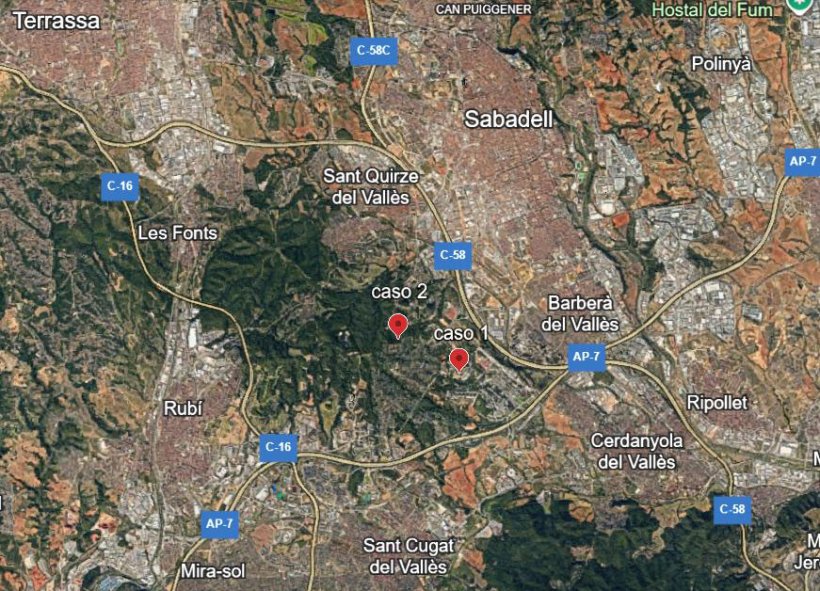
Figure 1. Mainly urban area with low density of pig farms.
PCR-positive and negative wild boars per week and area
IRTA-CReSA has analyzed:
- 704 PCR
- > 455 ELISA → 2 positive ELISA results and positive PCR results
| High-risk infected zone (0-6 km) | |||
|---|---|---|---|
| Total analyzed | POSITIVE | NEGATIVE | |
| Week 1 | 25 | 13 | 12 |
| Week 2 | 41 | 3 | 38 |
| Week 3 | 83 | 10 | 73 |
| Week 4 | 93 | 3 | 90 |
| Week 5 | 62 | 20 | 42 |
| Week 6 | 69 | 10 | 59 |
| Week 7 | 6 | 1 | < 5 |
| Week 8 | 120 | 4 | 116 |
| TOTAL | 499 | 64 | 435 |
| Low-risk infected zone (6-20 km) | |||
|---|---|---|---|
| Total analyzed | POSITIVE | NEGATIVE | |
| Week 1 | 9 | 0 | 9 |
| Week 2 | 48 | 0 | 48 |
| Week 3 | 38 | 0 | 38 |
| Week 4 | 41 | 0 | 41 |
| Week 5 | 22 | 0 | 22 |
| Week 6 | 25 | 0 | 25 |
| Week 7 | 6 | 0 | 6 |
| Week 8 | 16 | 0 | 16 |
| TOTAL | 205 | 0 | 205 |
Source: Official Veterinary Services of Catalonia
Given the low mortality observed, there is the possibility of:
- An acute/subacute strain (detection of a deletion affecting virulence genes) - may also be due to low transmissibility in the area
| Type of find | TOTAL | Infected zone (0-6 km) | Low-risk infected zone (6-20 km) | POSITIVE |
|---|---|---|---|---|
| Carcass/remains | 174 | 128 | 46 | 61 |
| Road/train collision | 153 | 57 | 96 | 1 |
| Killed healthy/caught in trap | 362 | 306 | 56 | 0 |
| Killed with symptoms | 15 | 8 | 7 | 2 |
| TOTAL | 704 | 499 | 205 | 64 |
Control measures applied
Delimitation of the infected zone: subdivided into a core zone and high-risk zone (6 km), and a low-risk zone (6 to 20 km).
Due to the detection of cases south of the AP-7 motorway, the Sierra de la Collserola Natural Park has been delimited and isolated. Reinforcement of population density reduction in the area to reduce the risk of the virus spreading.
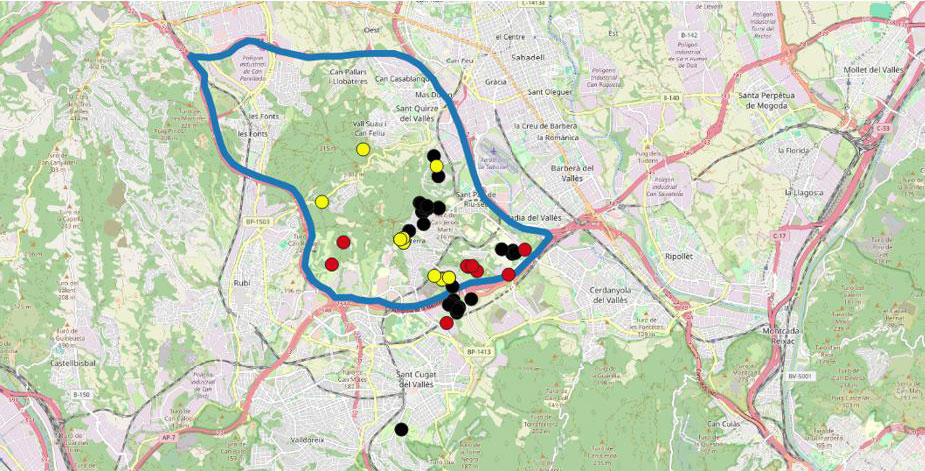
- Isolation of affected or potentially affected wild boar populations: electric fences; fences and enclosures anchored to the ground in critical passage areas, cattle grids, etc.
- Active search for carcasses in the infected zone.
- Hunting and other activities are prohibited in the high-risk zone (0-6 km) to prevent the spread of wild boars outside the infected zone.
- Population control measures in the high-risk zone (0-6 km) using silencers and thermal cameras, carried out by members of the rural police, Nature Protection Service, and/or Emergency Military Unit.
- Future reinforcement of hunting with hunters authorized by the Official Veterinary Services in the low-risk zone (6-20 km) to create a white zone, without wild boars or with the lowest possible density, to reduce the risk of the virus spreading to this zone in the event of an infected wild boar escaping from the high-risk zone.
- Eliminate as much of the population as possible in the shortest time possible. The birth of young is expected in March, and a population rebound must be avoided.
- Installation of eight Pig Brig traps to increase the capture of wild boars in different areas depending on the success of the captures, as quietly as possible.
Control measures implemented, isolation of zones
Second containment barrier around Collserola (AP7 and A2 in the south and other roads and routes in the north to prevent passage to Maresme; there is also the Cercanías barrier to the north).

Figure 3: Checkpoints in fenced areas of the core zone and in Collserola Natural Park.
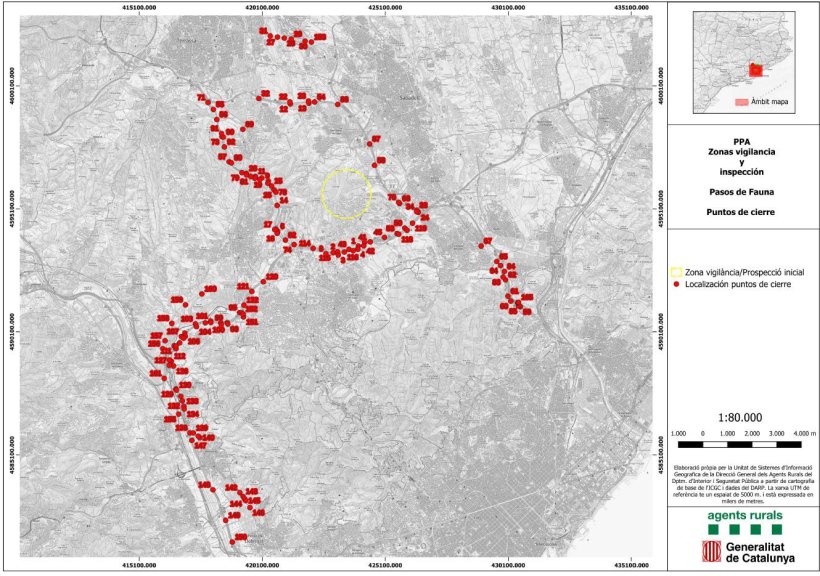
Figure 4. Checkpoints in fenced areas of the core zone and in Collserola Natural Park.
Control and prevention measures implemented on pig farms
There are 68 registered farms, of which only 57 are active (Source: Official Veterinary Services of Catalonia), with a total pig inventory of 66,680. The 41 commercial pig farms have been visited, and no compatible signs or lesions have been detected. Visits will be repeated periodically.
| Distance | Farm type | Production type | # | Total inventory |
|---|---|---|---|---|
| High-risk < 6 km 7 farms |
Commercial 3 farms |
Finishing | 1 | 285 |
| 1 | 0 | |||
| Piglets | 1 | 1123 | ||
| Non-commercial 4 farms |
Research center | 2 | 0 | |
| Training center | 1 | 0 | ||
| School farm | 1 | 0 | ||
| Low risk < 20 km 43 farms |
Commercial 30 farms |
Holding facility | 1 | 0 |
| Quarantine facility | 1 | 36 | ||
| Finishing | 2 | 0 | ||
| 14 | 31460 | |||
| Multiplier | 1 | 2703 | ||
| Farrow-to-finish | 2 | 2161 | ||
| Piglets | 6 | 13817 | ||
| Mixed | 1 | 0 | ||
| Gilt development | 1 | 0 | ||
| Nursery | 1 | 2200 | ||
| Non-commercial 13 farms |
Research center | 8 | 0 | |
| School farm | 3 | 1 | ||
| Own consumption | 1 | 3 | ||
| Zoo | 1 | 1 | ||
| Infected zone >20 km 18 farms |
Commercial 13 farms |
Finishing | 7 | 6294 |
| 1 | 0 | |||
| Piglets | 2 | 3707 | ||
| Mixed | 1 | 1181 | ||
| Gilt development | 1 | 1280 | ||
| 1 | 0 | |||
| Non-commercial 5 farms |
Research center | 1 | 428 | |
| School farm | 1 | 0 | ||
| Own consumption | 3 | 0 | ||
| Grand total | 68 | 66680 |
Source: Official Veterinary Services of Catalonia
The measures implemented are:
- Reinforcement of passive surveillance: Weekly PCR analysis of the first two deaths of adult pigs, or if none, piglets. Complemented in Catalonia by PCR analysis of leachates and tongue tips from carcasses in collection containers on farms.
- Reinforcement of biosecurity
Other measures
- Various meetings with the Autonomous Communities, the pig farming sector, the hunting sector, the competent environmental authorities, and the Nature Protection Service.
- Maintenance of a high level of passive surveillance.
- Biosecurity: Maintenance of good biosecurity conditions on pig farms and in hunting throughout the country.
- Ongoing awareness campaigns. Specific awareness campaigns on the recommendation not to feed wild animals.
- Communication with the Ministry of Transport to ensure and maintain adequate conditions in rest areas near highways, removal of garbage, and maintenance of fencing.
Training
- Recorded training course specifically for hunters, to be launched soon.
- Online ASF course for private and official veterinarians, developed in collaboration with the FAO Regional Office for Europe and Central Asia, begins on January 20, 2026. Two sessions of this course were already held in 2023, training more than 500 veterinarians.
Conclusions
- ASF was detected in Spain following its eradication in November 1994.
- The source remains under investigation.
- To date, all positive animals have been wild boars, all within the high-risk infected zone.
- Area with moderate wild boar density and low concentration of pig farms.
- Control measures are underway (delimitation of infected areas, active search for carcasses, trapping, etc.) through the deployment of a large number of resources in the field in record time.
- Strengthening passive surveillance, both in domestic pigs and wild boars, to ensure early detection of new cases, reinforcing biosecurity on pig farms, hunting activities, and raising awareness among all sectors involved, both pig farming and hunting, is key, and professional associations have a fundamental role to play in all of this, for which we ask for your full cooperation.
- There is the possibility of applying population control with silencers/night vision devices in high-risk areas, given a less virulent or less transmissible strain, to help reduce the wild boar population before the breeding season begins in March/April, thereby preventing a rebound in the population and cases.
Source: DG Health of Agri-Food Production and Animal Welfare SG Animal Health and Hygiene and Traceability
