

























 0
0
Tryptophan (Trp) is an essential amino acid that pigs cannot synthesize naturally and therefore must be supplied through the diet. In addition to its role in protein synthesis, Trp contributes to the production of serotonin, a molecule involved in appetite regulation; to the synthesis of other key metabolites such as niacin (vitamin B3); and to the regulation of the immune system through its antioxidant capacity, maintenance of mucosal integrity, modulation of microbiota composition, and promotion of intestinal health.
Tryptophan and its effect on appetite
In pigs, the effect of Trp deficiency on growth in both the nursery and finishing phases is associated with reduced appetite and, consequently, reduced feed intake.

Pigs have been observed to have an aversion to feeds deficient in Trp, and the physiological basis for this observation is due to an imbalance in the brain caused by disproportionate concentrations of amino acids in the blood and brain tissue.
When Trp intake is low, and there is a relative excess of other amino acids, it is difficult for Trp to reach the brain.
This occurs because Trp and long-chain neutral amino acids (LNAAs: valine, isoleucine, leucine, tyrosine, phenylalanine, and methionine) compete for the same transport system across the blood-brain barrier (the border between the blood and the brain).
Furthermore, some Trp in the blood binds to albumin, reducing its availability to reach the brain. Therefore, a high-protein diet, which contains many competing amino acids, can hinder Trp's entry into the brain.
Tryptophan and its role in immune system regulation
Under inflammatory conditions, a reduction in plasma Trp concentration has been observed due to activation of its catabolism through the kynurenine pathway, leading to the production of kynurenic acid and xanthurenic acid, which have immunomodulatory functions and regulate the inflammatory response, and ultimately niacin (vitamin B3), a molecule that plays an important role in maintaining energy metabolism and cellular function by acting as a precursor of the coenzymes NAD+ and NADP+, which are essential for oxidation-reduction reactions and ATP production (Figure 1).
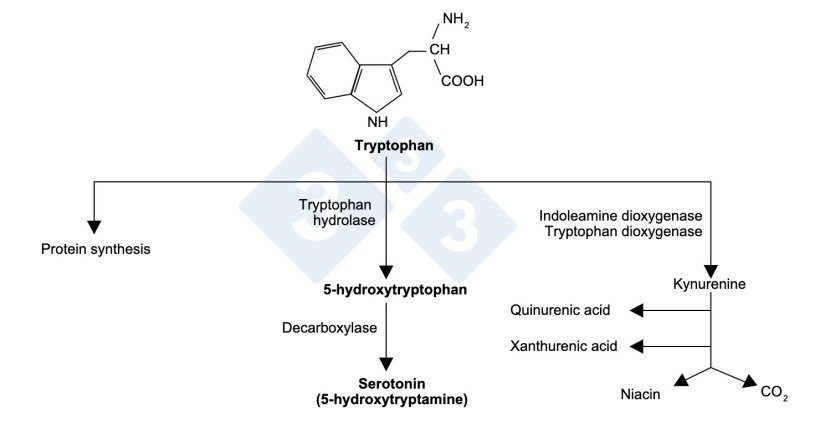
Figure 1. Tryptophan molecule and its pathways.
Pigs with pulmonary inflammation have been observed to have lower haptoglobin levels in their blood when fed a balanced diet containing Trp (Le Floc’h et al., 2004). Haptoglobin is an immune system protein that increases during inflammatory processes, and is therefore used as an indicator of systemic and local inflammation (intestinal, pulmonary, etc.) in pigs.
Tryptophan and its effect on stress
In humans with psychiatric disorders, Trp deficiency increases anxiety and irritability. In several animal species, the Trp inclusion level in the diet has also been observed to modulate aggressive behavior and the stress response.
A recent study observed that nursery piglets supplemented with Trp had a lower frequency of ear biting, fewer skin lesions, longer rest time, and greater growth (Park et al., 2025).
In stressed pigs, lower plasma cortisol and norepinephrine concentrations have been observed when they were fed 7 g/kg of standardized ileal digestible Trp (Koopmans et al., 2005, 2006). Furthermore, after the stress episode, the concentrations of both molecules returned to baseline levels more quickly compared to stressed pigs fed the control diet.
The mechanism by which Trp interacts with the stress response is not entirely clear, although it appears to be related to the production of serotonin at the brain level.
In fact, it has been observed that increasing the level of Trp in the diet from 0.18% to 0.28% linearly increases the concentration of serotonin in growing pigs (Kwon et al., 2022).
More information about tryptophan is available in its technical data sheet.
