

























 0
0
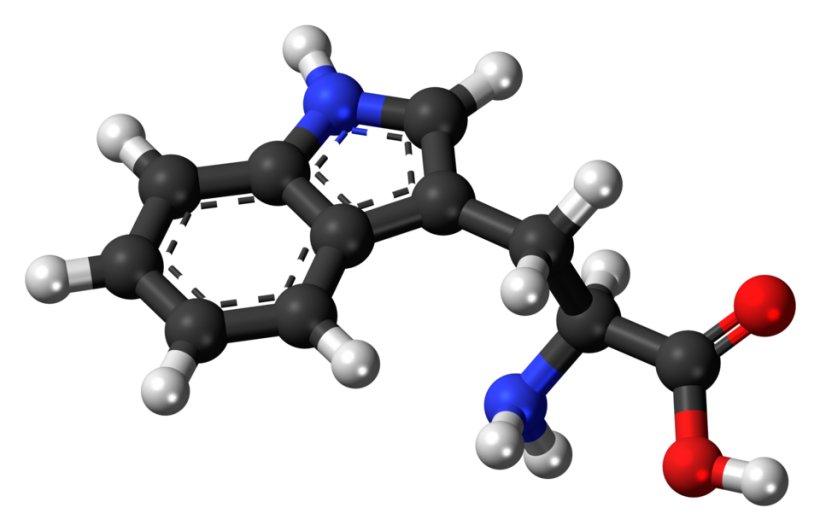
Tryptophan (Trp) is an essential amino acid that pigs cannot synthesize naturally and must therefore be supplied through their diet. In addition to its role in protein synthesis, Trp contributes to the production of serotonin, a molecule that influences appetite regulation, and to the production of other key metabolites, such as niacin (vitamin B3). It also helps regulate the immune system through its antioxidant capacity, maintains mucosal integrity, modulates microbiota composition, and promotes intestinal health (Figure 1).
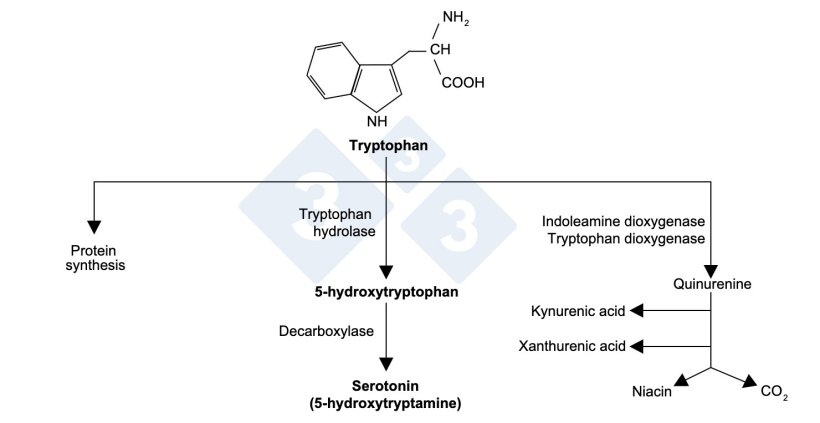
Figure 1. Tryptophan molecule and its pathways.

Sources of tryptophan
Like other essential amino acids, pigs obtain Trp either from raw materials or from specific supplements added to the feed. Regarding feed ingredients, cereals such as corn (0.06%) and wheat (0.13%), which are common in pig diets, have a low Trp content. Meanwhile, ingredients such as soybean meal (0.63%) have a more acceptable Trp content.
The raw materials with the highest Trp levels are concentrates and isolates from certain plant protein supplements, such as sunflower meal (0.36-0.47%) or rapeseed cake (0.42% Trp), fish meal (0.56-0.70%), or blood derivatives such as 70% CP animal plasma (1.19-1.41%).
The result is that, with diets that meet energy requirements without exceeding the maximum recommended protein levels, the combination of cereals and standard protein supplements in the formula is often deficient in Trp. Thus, the use of synthetic L-Trp supplements is very common in pig feed formulation.
L-tryptophan (L-Trp) is obtained through microbial fermentation, in which microorganisms synthesize the amino acid de novo from simple carbon substrates (such as glucose and indole) and non-protein nitrogen sources (ammonia, ammonium salts, or urea), without proceeding from the direct hydrolysis of proteins, which allows for controlled production and high purity in L-form.
The commercial product has a purity of 98% with a crude protein equivalent of 85%. Therefore, in situations where inclusion is low, excipients are used to achieve greater homogeneity in the mixture.
Alternatively, in some parts of the world, it is also obtained by chemical synthesis from acetaminomalonic ester and phenylhydrazine, but this reaction generates a mixture of DL-Trp, which is less available in monogastric animals, and therefore its use in pig feed is very limited.
Recommended levels in pigs
In swine formulations, Trp is usually the fourth limiting amino acid for growth, after lysine, methionine+cysteine, and threonine. This means that when Trp inclusion is low compared to other essential amino acids, protein synthesis and deposition are limited and, consequently, growth is compromised.
Trp recommendations are commonly expressed on a digestible basis and as “ideal protein” in relation to standardized ileal digestible lysine (SID Lys). Table 1 shows the values recommended by different nutritional table sources; these values vary considerably. For example, for nursery piglets, recommendations range from a Trp:SID Lys ratio of 16 to 21%. In addition, according to several recent studies, current genetic lines offer greater growth potential and a different response to stress, increasing Trp requirements above the recommendations currently available in the tables (Capozzalo et al., 2016; Cho et al., 2023).
Table 1. Recommended “ideal protein” (%) of the tryptophan/standardized ileal digestible (SID) lysine ratio in piglets, finishing pigs, and gestating and lactating sows.
| Nursery piglets (7 a 12 kg PV) |
Finishing pigs | Getation | Lactation | |
|---|---|---|---|---|
| CVB, 2020 | 19 | 20 (25-120 kg LW) | 19 | 19 |
| FEDNA, 2024 | 20 (5-20 kg LW) | 18 (20-70 kg LW) 20 (> 70 kg LW) |
20 | 20 |
| FEDNA, 2013 | 20 (5-20 kg LW) | 19 (20-100 kg LW) | 19 | 19 |
| NRC, 2012 | 16 | 17,4 (20-50 kg LW) 17,7 (50-80 kg LW) 18,2 (80-120 kg LW) |
18.1-21 | 19-19.5 |
| Rostagno, 2024 (Brazilian tables for poultry and pigs, 5th edition) |
21 | 20 | 20 | 22 |
Recent findings
1. Effects of dietary leucine and tryptophan on serotonin metabolism and growth performance of growing pigs.
An experiment was conducted to test the hypothesis that increased dietary Trp is needed in high-Leu diets, such as a corn-soybean-based diet, for growing pigs to prevent a drop in plasma serotonin and hypothalamic serotonin concentrations and to maintain growth performance of animals. A total of 144 growing pigs (initial weight: 28.2 ± 1.9 kg) were assigned to 9 treatments in a randomized complete block design with 2 blocks, 2 pigs per pen, and 8 replicate pens per treatment. The 9 diets were formulated in a 3 × 3 factorial with 3 levels of dietary Leu (101%, 200%, or 299% standardized ileal digestible [SID] Leu:Lys), and 3 levels of dietary Trp (18%, 23%, or 28% SID Trp:Lys). A basal diet that met requirements for SID Leu and SID Trp was formulated and 8 additional diets were formulated by adding crystalline L-Leu and (or) L-Trp to the basal diet. Results indicated that increasing dietary Trp increased (P < 0.05) hypothalamic serotonin, whereas increases (P < 0.05) in average daily gain (ADG) and average daily feed intake (ADFI) were observed only in pigs fed diets containing excess Leu. Increasing dietary Leu reduced (P < 0.05) ADG, ADFI, and hypothalamic serotonin. However, the increase in ADG and ADFI caused by dietary Trp was greater if 299% SID Leu:Lys was provided than if 101% SID Leu:Lys was provided (interaction, P < 0.05). Plasma Leu concentration was positively affected by dietary Leu and negatively affected by dietary Trp, but the negative effect of Trp was greater if 299% SID Leu:Lys was provided than if 101% SID Leu:Lys was provided (interaction, P < 0.05). In conclusion, increased dietary Leu reduced ADG, ADFI, and hypothalamic serotonin concentration, and influenced metabolism of several indispensable amino acids, but Trp supplementation partly overcame the negative effect of excess Leu. This demonstrates the importance of Trp in regulation of hypothalamic serotonin, and therefore, feed intake of pigs.
2. Effect of varying levels of dietary tryptophan on aggression and abnormal behavior in growing pigs.
Two randomized block design studies were conducted to assess the influence of varying dietary tryptophan levels on aggression and abnormal behavior in 8-week-old pigs. Six diets were formulated which met or exceeded all nutrient requirements yet differed according to the dietary tryptophan content. The first study included control (100% standardized ileal digestible tryptophan), supplemented (175% standardized ileal digestible tryptophan), and supplement-plus (250% standardized ileal digestible tryptophan) experimental diets, while the second study included deficient (80% standardized ileal digestible tryptophan), adequate control (105% standardized ileal digestible tryptophan), and extra-tryptophan (130% standardized ileal digestible tryptophan) experimental diets. Pigs fed diets with supplemented tryptophan had higher concentrations of both plasma tryptophan and tryptophan to large neutral amino acid ratio compared to the pigs fed the control diet in the first study, while no significant differences were detected for plasma tryptophan or the tryptophan to large neutral amino acid ratio in the second study. Diet did not have an effect on weight, feed intake or behavior throughout the studies. Despite an increase in circulating plasma tryptophan in response to an increase in dietary tryptophan in the first study, we failed to see an impact of the dietary treatment on body, tail and ear-biting behavior under the conditions studied.
3. SID Trp–Lys Ratio on Pig Performance and Immune Response After LPS Challenge.
This study aimed to evaluate the effects of the standardized ileal digestible tryptophan-to-lysine (SID Trp–Lys) ratio through the supplementation of different levels of L-tryptophan on pig performance and immune response following an LPS challenge. A total of 120 entire male pigs, with an average body weight of 16.5 ± 0.50 kg, were allocated in a randomized block design with four treatments, ten replicates per treatment, and three animals per experimental unit. The experimental treatments consisted of SID Trp–Lys ratios of 16%, 18%, 21%, and 24%, achieved through L-tryptophan supplementation. The evaluated performance parameters included the final body weight (BW), average daily gain (ADG), average daily feed intake (ADFI), and feed conversion ratio (FCR). Blood samples were collected on day 21 to determine serum serotonin levels, and on day 26, pigs were inoculated with LPS to induce an immune challenge, followed by blood sampling to assess cytokine responses. The results showed that pigs fed the 16% SID Trp–Lys ratio exhibited a lower FBW. The SID Trp–Lys ratios influenced performance parameters, with quadratic responses observed for the FBW and FCR, where the highest FBW and lowest FCR were recorded at 22.05% and 21% SID Trp–Lys, respectively. A linear increase was observed for ADG, with a trend for a linear increase in ADFI. No effects of the SID Trp–Lys ratios were detected on serum serotonin levels. An increase in cytokine levels was observed in pigs challenged with LPS compared to non-challenged animals. In conclusion, the results of this study suggest that a SID Trp–Lys ratio of 21% for FCR and 24% to achieve the best ADG and ADFI responses is recommended. Furthermore, the 24% SID Trp–Lys ratio may provide a better immune response when animals are subjected to challenges.
