

























 1
1
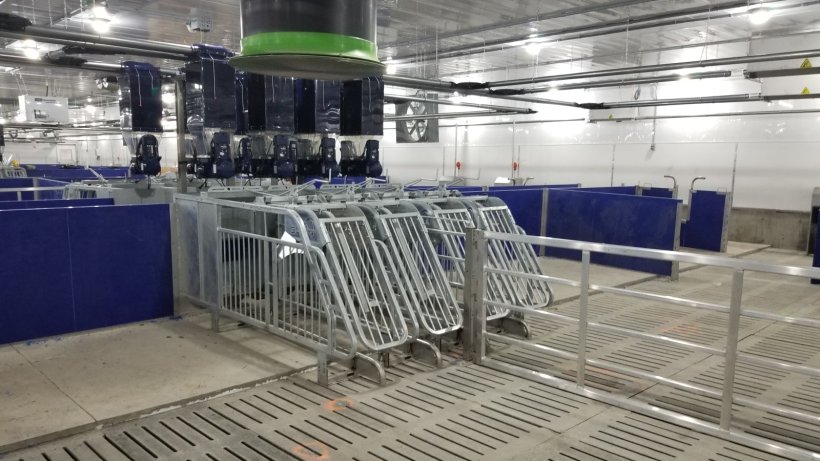
The farm, which focuses on producing weaned piglets, also acts as a catalyst for public research in partnership with universities and research centers while offering services directly to private companies, supporting producers and companies in implementing experimental protocols, analysing technical data, and validating innovative devices directly on the farm.

The farm
It is a sow farm with gestation and farrowing with approximately 675 breeding sows. It works with 4-week batches and has 5 batches of sows, each with 140 animals.
The farm's batch management system allows it to maintain a high health status and ensure a constant flow of animals for the various trials. The farm's design was created to maximize animal welfare and research efficiency.
Four of these batches of animals are in gestation. Each batch is divided into two groups of around 70 animals, each with four precision electronic feeding machines, so that the first- and second-parity sows can be separated into one group and the rest of the larger multiparous sows into another. The remaining batch is in the farrowing unit, and all females on the farm are individually identified electronically.
During gestation, sows are housed in groups with automated feeding stations equipped with RFID identification, which allows the feeding curve to be adjusted for each animal and up to six different treatments to be applied, thanks to the four feed lines that distribute feed from the farm's various silos. In addition to these feed lines, each electronic station has precision feeders with several hoppers that allow perfectly controlled “blend feeding,” used to optimize feed efficiency and, in turn, to conduct multiple research studies.
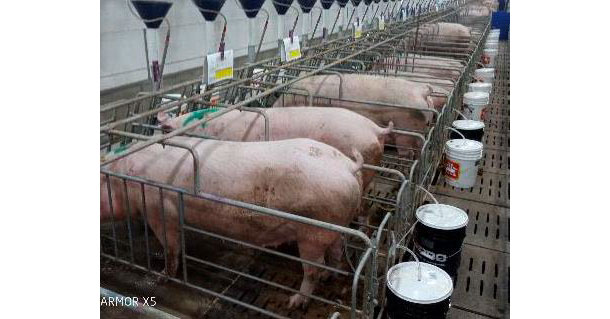
This same approach is replicated during lactation, where each stall also has four feed lines and a feeder with two hoppers that can receive different combinations of diets, maintaining treatment continuity from gestation to farrowing.
The farm has mostly conventional maternity pens, but also has some that allow the sow to be released after farrowing and others with anti-crushing lifting systems and enlarged nests for piglets, which are used selectively in the trials the center conducts.
The farm's air is filtered through positive pressure, and it has a controlled environment with controlled temperature, humidity, and gas with cooling panels for the summer. In addition, in both gestation and farrowing, there is continuous monitoring of feed and water consumption, as well as sow feeding behavior using sensors in the feeders. This allows for studies on intake, thermoregulation, digestive problems, and response to heat stress.
Altogether, the infrastructure is undoubtedly designed to be a flagship facility for evaluating new nutritional technologies and strategies in a controlled and repeatable manner.
The research
In recent years, the Centre de développement du porc du Québec (CDPQ) has established its experimental unit as a benchmark for applied research in sow nutrition, aiming to improve production efficiency, sustainability, and animal welfare amidst increasing technical and economic complexity in the swine industry.
Over the last five years, the center has conducted 35 research projects, 66% of which were publicly funded and the rest privately funded. More than 7,000 sows were monitored, weighed upon entering the farrowing room and after weaning as they returned to the gestation unit, and back fat was monitored by ultrasound. Information was gathered from more than 100,000 piglets born alive and weighed individually at birth, and from 85,000 weaned piglets.
• Precision feeding (nutrients tailored to the sow)
One of the main areas of research has been precision feeding during gestation, focusing on adjusting the nutritional intake to each sow's actual needs. Noteworthy in this area are the trials on lysine, conducted in a study with 393 gilts over three reproductive cycles, comparing different nutritional strategies. The results show that it is possible to maintain reproductive performance with lower nutrient intake, achieving even +0.6 weaned piglets per sow and a 5% reduction in mortality in certain treatments. In multiparous sows, better weight gain during gestation and a 3% reduction in stillbirths were also observed; although there was greater mobilization of back fat during lactation, which highlights the need for a dynamic approach between phases.
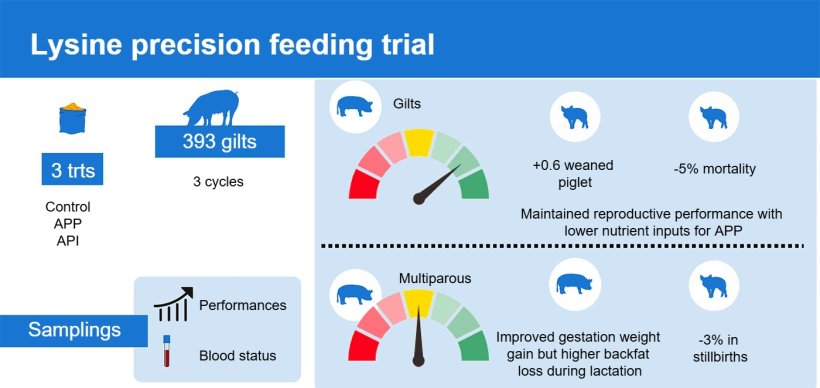
*API = Precision feeding according to sow weight
Another strategic line has been the precision feeding of nutrients such as phosphorus and calcium evaluated through serology and urine excretion, evaluated in 121 sows over two cycles. The trials confirm that it is possible to maintain litter performance with lower P and Ca intakes, increasing backfat thickness at farrowing (+1.5 mm) and reducing both stillbirths and mortality by 5%. However, the results also show that calcium can become a limiting factor, especially in the second reproductive cycle, with a risk of hypocalcemia if the transition to farrowing is not managed properly.
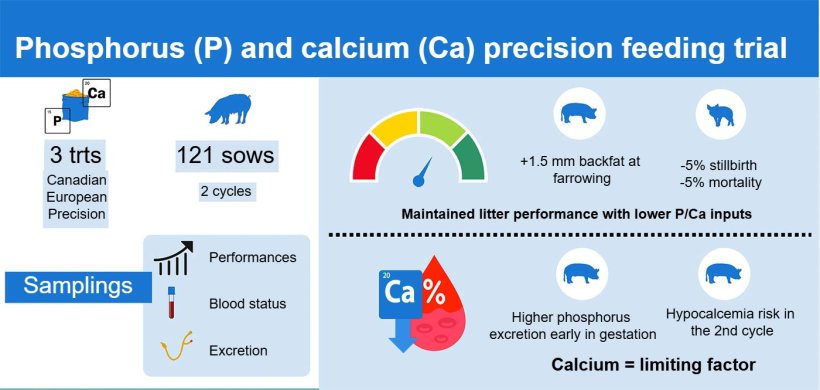
In addition to these productive results, findings were collected demonstrating significant variability in urinary excretion by sows. This shows that individual management of P and Ca in diets can lead to a 10% reduction in nitrogen excretion and a 6% reduction in phosphorus excretion, which has a significant environmental impact.
• Micronutrients
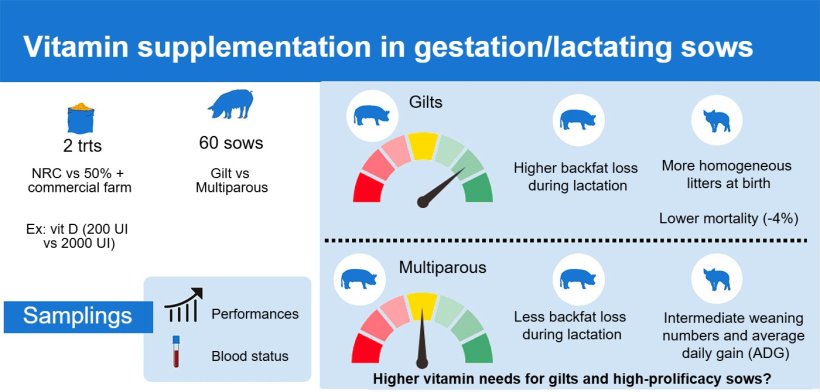
Vitamin supplementation during gestation and lactation has been another important focus of research. In studies with 60 sows, comparing NRC recommendations with levels increased by 50% (e.g., comparing 200 international units of vitamin D recommended by the NRC with 2000 UI), more homogeneous litters at birth and a 4% reduction in mortality in gilts were observed. The results suggest that the vitamin requirements of gilts and highly prolific sows may be underestimated, especially in situations with high metabolic demand, although there are different effects on the mobilization of body reserves during lactation.
• Alternative grains
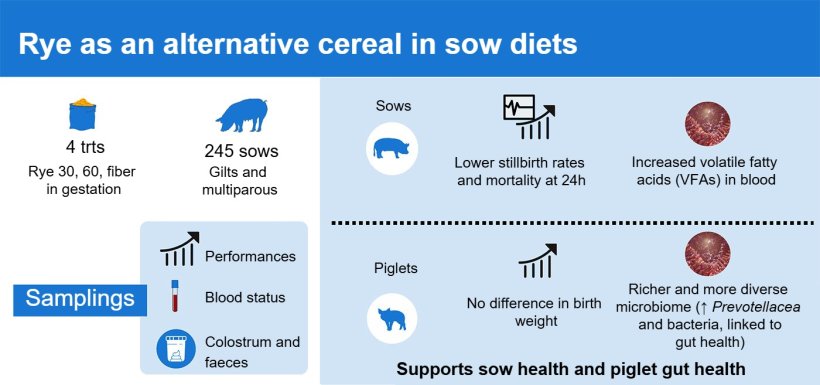
The CDPQ has also explored alternatives to traditional grains, such as using rye in gestation diets. In trials with 245 sows, rye has proven to be a viable option from a productive and health standpoint, associated with lower rates of stillbirths and mortality in the first 24 hours, with no negative effects on birth weight. In addition, higher concentrations of volatile fatty acids were observed in the blood, as well as a richer and more diverse intestinal microbiome in piglets, pointing to potential benefits for digestive health.
The future
Looking ahead, the center is moving toward a multidisciplinary approach integrating nutrition, health, welfare, and monitoring technologies. Upcoming projects include studies on Ca strategies during the transition to farrowing, Se sources and levels to improve post-weaning health, and the evaluation of the impact of weaning and transporting piglets of different ages on their welfare and performance. All of this reinforces the CDPQ's role as a platform for generating applied knowledge aimed at offering practical, data-based solutions for more efficient and sustainable pig production.
In addition, the CDPQ's efforts are focused on smart monitoring and intestinal health. A key project, developed in collaboration with institutions such as Laval University, is studying the manipulation of the sow microbiome to promote piglet health. The goal is to optimize the maternal intestinal flora to transfer optimal natural immunity to piglets, thereby reducing their dependence on antibiotics after weaning.