
























 0
0
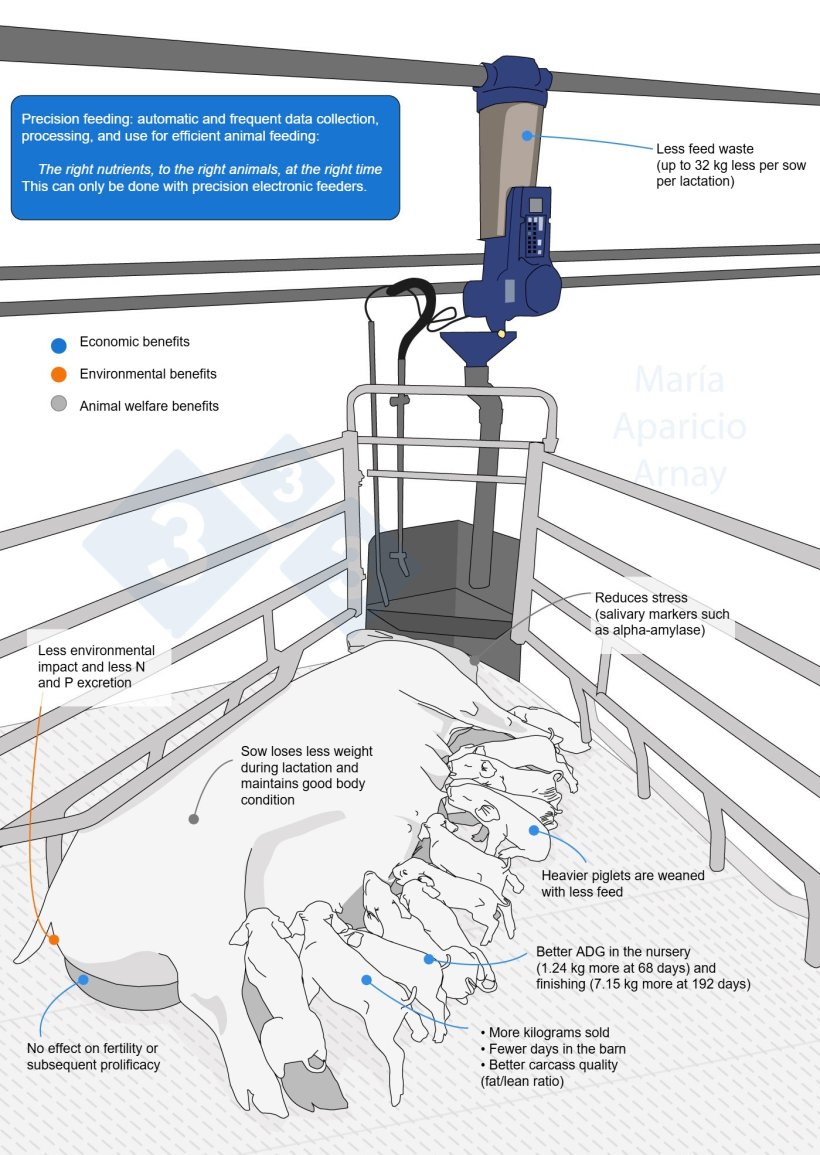
This strategy, based on automatic and frequent data collection and individualized precision feeding, allows the right nutrients to be supplied to the right animal at the right time.
The infographic below visually summarizes the main benefits observed in several recent studies and described in detail in the article "Precision feeding for lactating sows: The path to sustainability and efficiency," which we published a few months ago.

In these studies conducted under commercial conditions, the use of electronic feeders during lactation has been shown to significantly reduce feed waste without compromising the fertility or subsequent prolificacy of sows. These savings translate not only into direct economic improvements but also into a lower environmental impact thanks to reduced nitrogen and phosphorus excretion.
The production benefits are also clear: sows fed using electronic systems lose less weight, maintain their body condition better, and wean heavier piglets, which subsequently show superior growth, improving feed conversion and carcass quality, as well as sow welfare.
Overall, precision electronic feeding represents a decisive step toward a more efficient, competitive, and animal welfare-friendly production model. The technology not only optimizes resource use but also allows for greater and better production, benefiting sows, their piglets, and farm sustainability.