
























 0
0
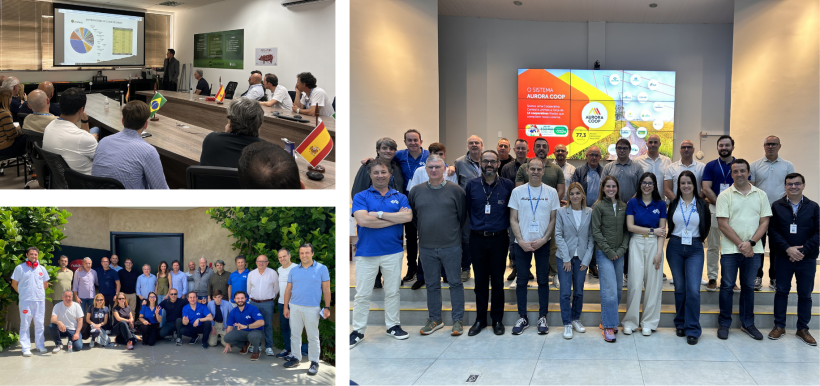
333 Brazil organized a technical mission with a delegation of approximately 20 Spanish professionals, who visited Brazil between April 12 and 19, 2026, for a benchmarking trip focused on pork production and the meat industry. INNOVACC, the Catalan cluster for the meat and alternative protein sector, brought together representatives from the main meat companies in Catalonia, a representative from the Government of Catalonia, and the INNOVACC team itself. The participants' profiles reflected the strategic nature of the mission: CEOs, managing directors, farm managers, and research and development managers.
The agenda, designed by 333 Brasil, was structured around exclusive visits to corporate environments and leading centers, without accessing farms or primary production units. The priority was to understand how the visited companies and institutions organize their business models, management structures, and innovation strategies. This format ensured that benchmarking was conducted at a strategic and executive level, while respecting the sanitary protocols of the companies visited.

The itinerary included the South region, the historical cradle of Brazilian pork production and a national benchmark in production density, technology, and supply chain organization. This choice was not accidental: a significant portion of national production is concentrated in the South and is home to some of the country's most advanced farms in terms of management and biosecurity. The second leg took the delegation to the Central-West region, which in recent decades has consolidated its position as a frontier for the expansion of animal protein, driven by its proximity to grain production and increased investment in agro-industrial infrastructure.
By country, Brazil is the world's third-largest producer (behind China and the USA) and third-largest exporter of pork. For European companies seeking scale, efficiency, and innovation as benchmarks for competitiveness, the country represents a natural learning destination and, increasingly, a strategic partner for the global sector.
The visit reinforces the importance of connections between countries with a strong tradition in animal protein production and highlights an increasingly necessary movement in the sector: growth based on the exchange of experiences, the joint construction of solutions and a long-term vision for global pork production.