























Week of 22-Mar-2024
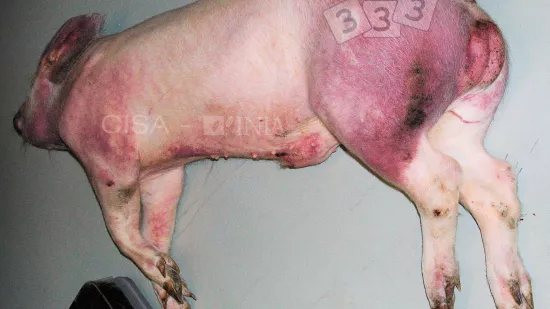
Which infectious disease is the most likely cause of the haemorrhages visible on the serosal surfaces of this growing pig which was found dead?
Haemorrhagic lesions within a carcass should always raise suspicion of Classical or African Swine Fever (which are pathologically indistinguishable) as would multiple sudden deaths. As well as occuring on serosal surfaces, haemorrhagic lesions are seen in lymphatic tissue —especially the spleen, lymph nodes and tonsils— and parenchymatous tissues. Skin lesions suggestive of septicaemia may also be evident. In more chronic cases button ulcers may be present in the mucosa of the large intestine following a period of high fever prior to death. Reproductive failure in the form of abortion can occur as well as nervous,enteric and respiratory disease in any age pig.
The clinical and epidemiological picture can be useful to differentiate PDNS the pathology of which can suggest haemorrhagic disease. Illness affecting a wide age range of animals would suggest ASF/CSF. If there is any doubt ASF/CSF suspicion should be notified and investigated.
African Swine Fever —against which there is no vaccine— has become widespread in eastern Europe following its initial incursion via Georgia in 2007 and subsequent spread through Russia. It now represents a very real threat to all European pig populations especially where biosecurity lapses occur and wild boar populations are prevalent.
Photo of the week
Week of 13-Mar-2026
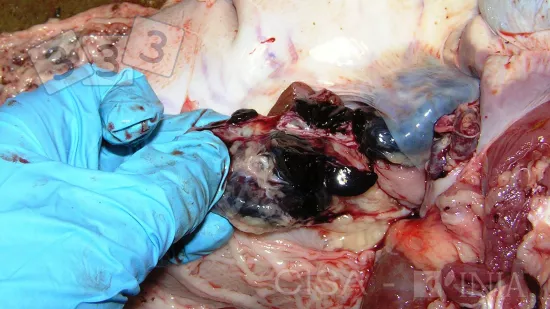
In the necropsy of an animal with fever we found haemorrhagic and enlarged lymph nodes. What are the possible causes?
Week of 06-Mar-2026
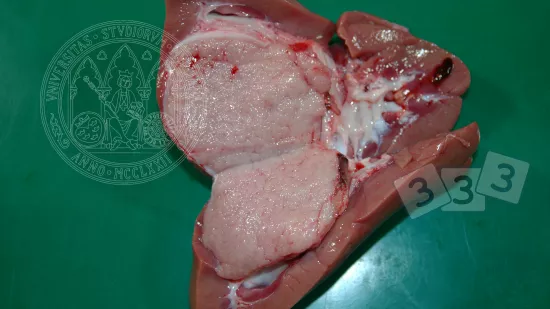
The aspect of the lesion is more characteristic of a:
Week of 27-Feb-2026
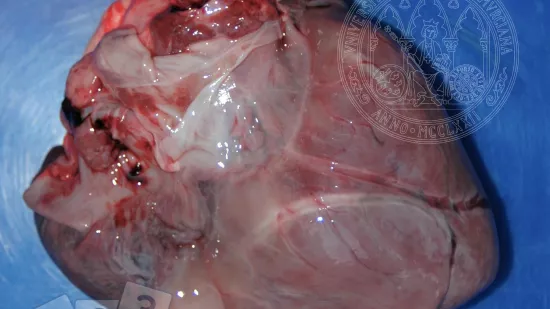
This type of lesion appears in cases of:
Week of 20-Feb-2026
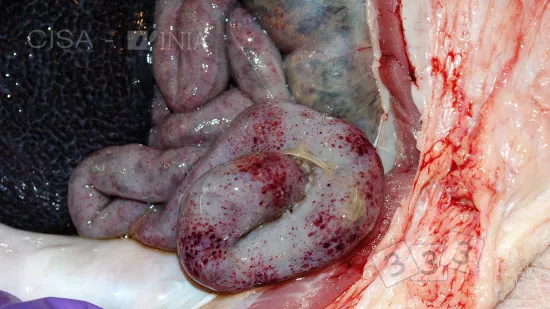
This animal showed very high fever as well as lethargy. What are the possible causes of these lesions?
Week of 13-Feb-2026
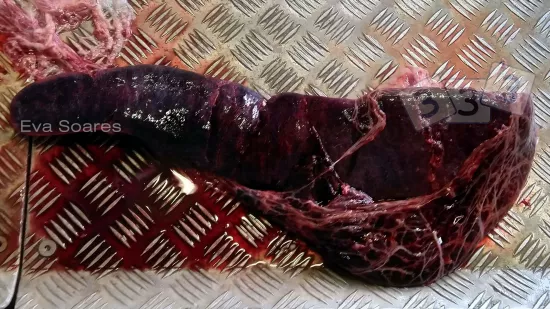
Which can be the causes of splenomegaly?
Week of 06-Feb-2026
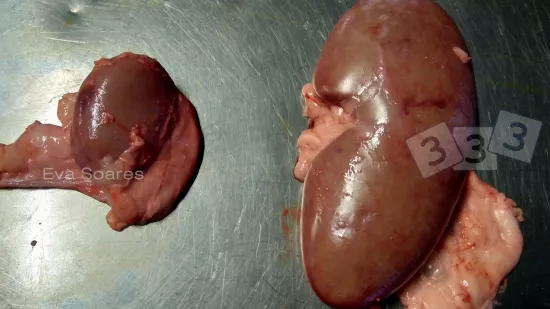
What's the name of this malformation?
Week of 30-Jan-2026
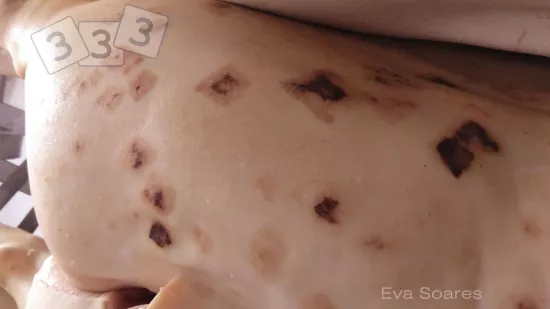
Patches on the skin of a fattening pig seen at an abattoir. Which is the most probable cause for this lesion?
Week of 23-Jan-2026
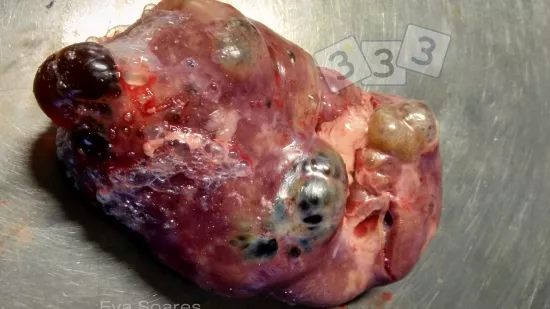
This picture is frequently seen at abattoirs. What lesion can we see in this kidney?
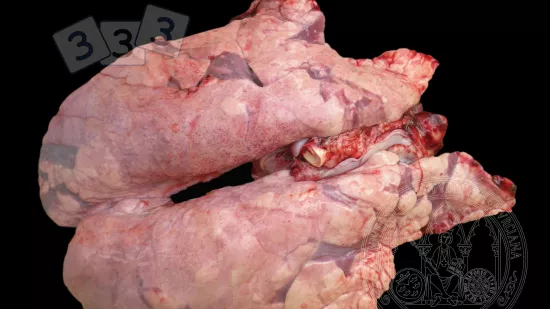
Week of 16-Jan-2026
Which lesion patterns are present in this lung?
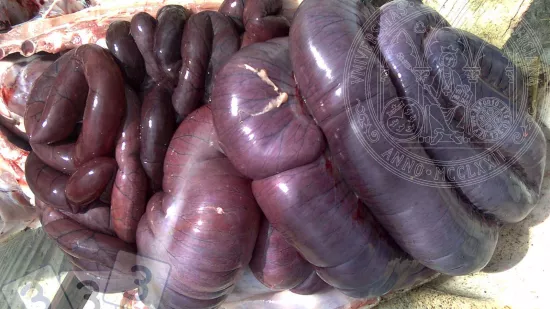
Week of 09-Jan-2026
What is the name of this process?
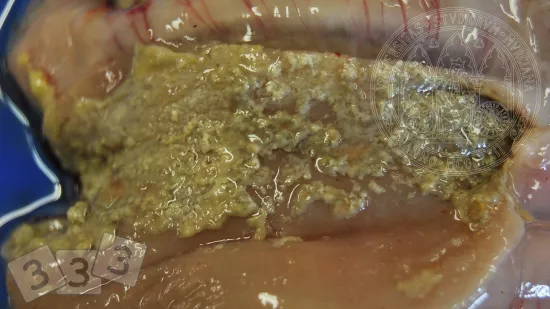
Week of 02-Jan-2026
What is the name of this lesion?
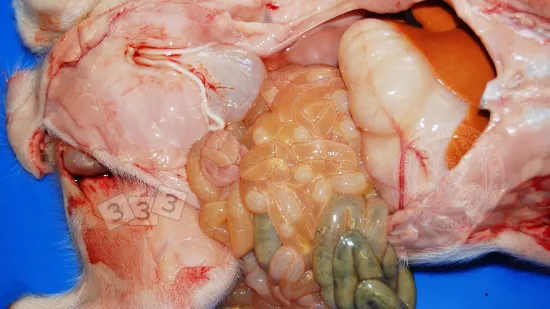
Week of 26-Dec-2025
What is the possible aetiology of this lesion?
Week of 19-Dec-2025
What could be causing these lesions?
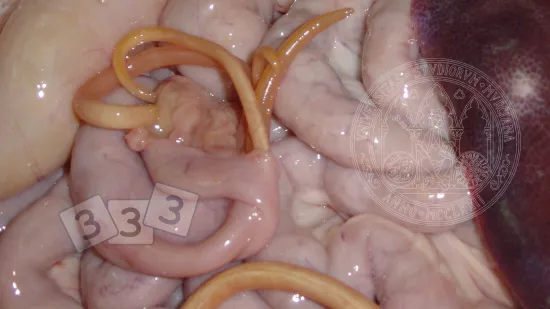
Week of 12-Dec-2025
What is the name of this parasite?
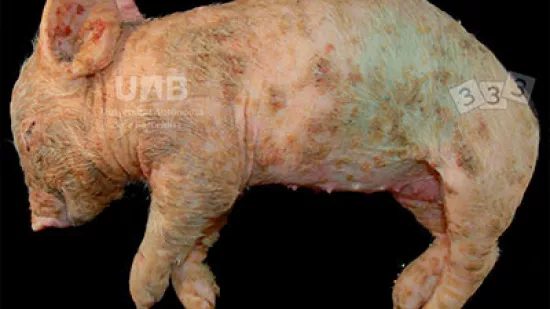
Week of 05-Dec-2025
Which disease is this?
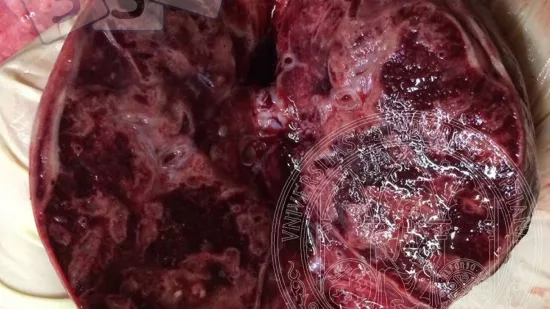
Week of 28-Nov-2025
This image of a cross-section of a pig lung is characteristic of a pneumonia caused by:
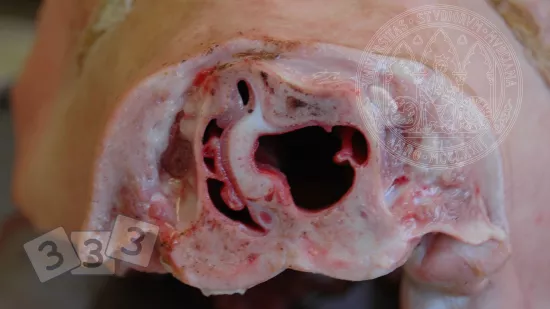
Week of 14-Nov-2025
What pathogens are involved?
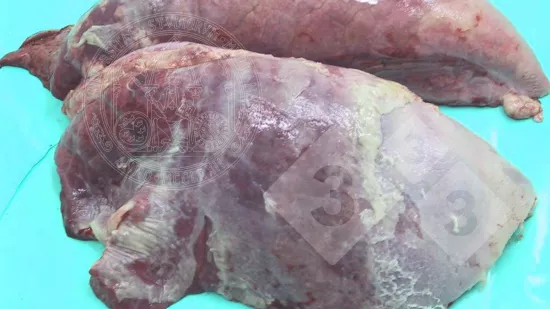
Week of 07-Nov-2025
Which lesions are present in this lung?
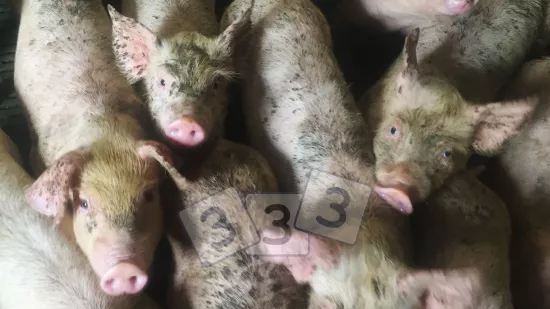
Week of 24-Oct-2025
Most of the pigs in this pen have dark coloured over the skin. What is the cause of this condition?
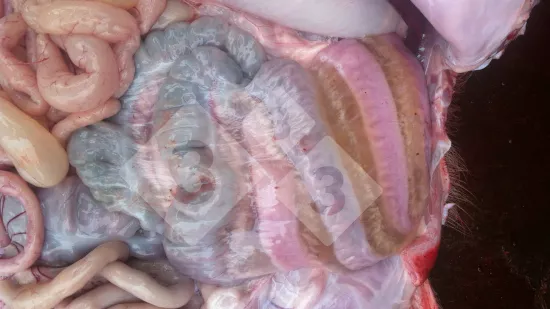
Week of 17-Oct-2025
A number of weaners died suddenly within the first 4 weeks post-weaning. All them have oedema of mesocolon at post-mortem examination. What is the most likely cause of this lesion?
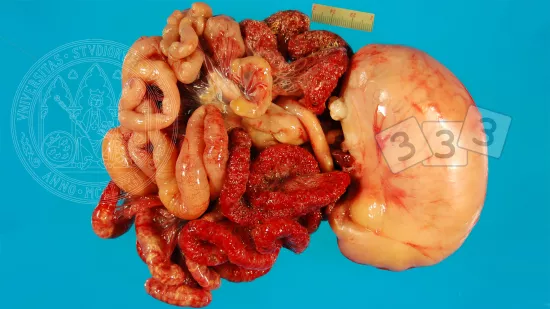
Week of 10-Oct-2025
Which pathogen causes this lesion?
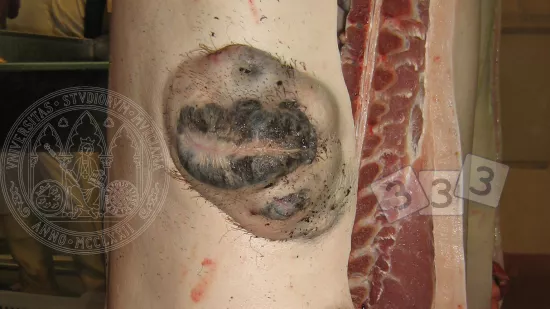
Week of 26-Sep-2025
What lesion is seen?
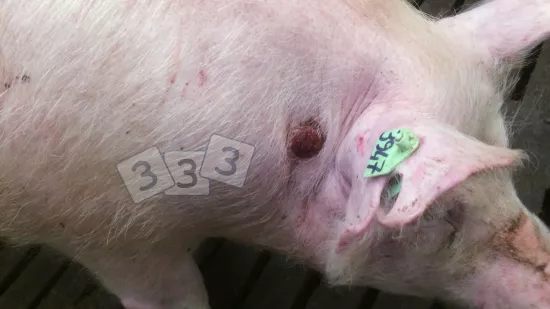
Week of 19-Sep-2025
Many sows have abscesses in the side of the neck. What is the cause of this lesion?
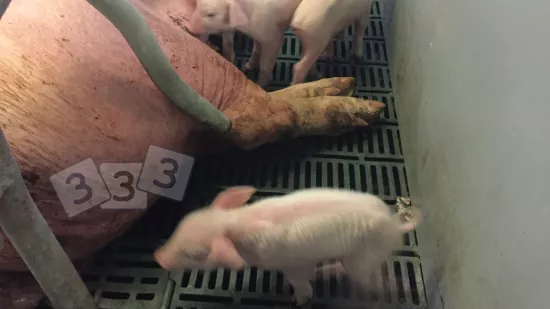
Week of 12-Sep-2025
The whole litter of piglets is trembling and shacking. What is the cause of this condition?
Week of 05-Sep-2025
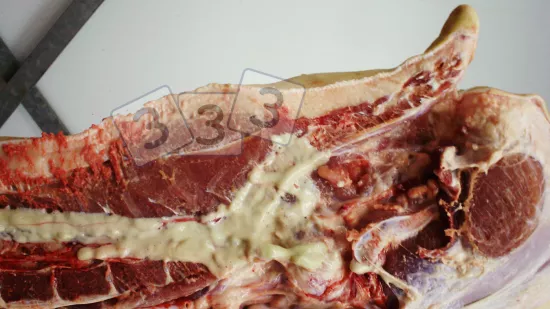
A carcass is split in half and an abscess is found in the spine and burst. What is the cause of this lesion?
Week of 29-Aug-2025
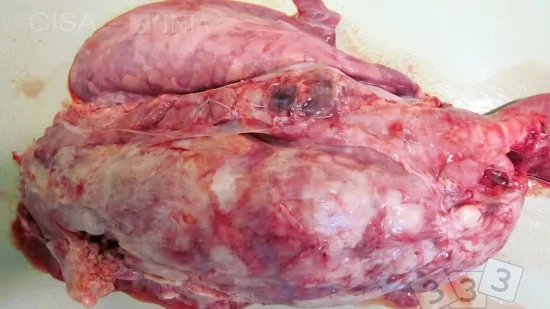
This animal showed respiratory problems. What can be the cause of these lung lesions?
Week of 22-Aug-2025
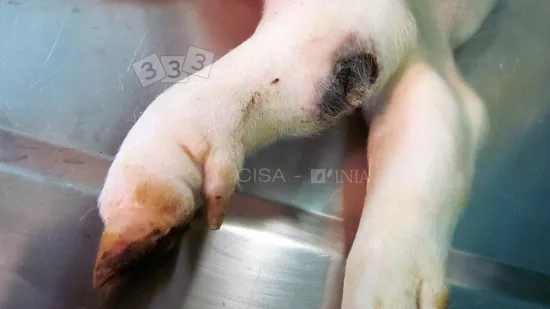
This lesion was found after the animal showed recurrent transient fever. Which are the possible causes?