























 Company
Vilomix
Denmark
15
Publications
158
Followers
Company
Vilomix
Denmark
15
Publications
158
Followers
Pig nutrition series 6 out of 9: Best feed practices prepare piglets for weaning


Modern sow herds stand out for their large litters. Their piglets vary in size and are more likely to be small. During the first three to five weeks, the right feed is critical both to piglet survival and growth.
Several factors influence the performance of suckling piglets. One is birth weight, which is determined by the size of the litter and the feeding of the sow during gestation. Birth weight has a particular effect on the piglet’s development and fattening potential.
New-born piglets also need a constant supply of fresh water, a creep area temperature of around 35° C and an iron supplement to overcome their natural deficiency and the low iron level in sow’s milk. The iron should be given orally or as an injection three days after birth to prevent anaemia and mortality.
Colostrum is the most important source of nutrition immediately after farrowing. High in antibodies, it provides essential protection against diseases that may exist in the herd. Within the first 24 hours, the antibodies can pass directly through the new-born’s intestinal wall and into the blood stream, reducing the risk of sickness. Sow’s milk should then be available for the first three weeks.

Figure 1. Relationship between bodyweight gain and colostrum intake, measured over the 25 hours after the first suckling (Devillers et al. 2004)
Supplementation of sow’s milk
Once suckling is established, however, there are many benefits to be gained from supplementing the sow’s milk with a tasty milk substitute. When combined with good management practices, this supports producers in raising more healthy piglets per sow.
The milk replacer must at all times match their age and nutritional needs and can be provided by a manual delivery or cup system.
Before weaning, piglets should have free access to feed to stimulate enzyme production and optimise growth.
Feed should be provided 2 to 4 times a day during the lactation period. Never compromise on nursing feed or the plant-based starter mix. A super pre-starter mix is recommended from day 4 to 5 after farrowing to get enzyme production off to an early start. The feed must comprise easily-digestible ingredients, including as many protein sources as possible, such as milk, blood plasma and fishmeal.
Encouraging early feed intake
In the weaning pen, piglets should be given the same feed mixture as they received in the farrowing pen. Piglets should then start eating earlier because they recognise the feed.
To prepare the piglets for weaning, a handful of pre-starter feed can be sprinkled on the floor from the second week after farrowing. If sprinkled near the head of the sow, she will start to eat the feed first. The piglets will then follow her example.
Once the piglets have learned to eat, the feed can be poured into the feeder on the floor. Long troughs are recommended so the piglets can feed at the same time. The pigs should eat all feed within half an hour of feeding to ensure good hygiene and prevent bacteria proliferation.
In the first 20 days, one handful of feed – around 150-200g – is enough to meet the needs of 12 piglets. By day 24, the same piglets will eat 600-800g. Creep feed intake during suckling stimulates feed consumption in the early stages after weaning, resulting in greater initial daily weight gain.
Total feed intake before weaning is about 0.5 kg. Early feed training is more important than weaning age itself; piglets that learn to consume and digest solid feed before weaning typically achieve better growth and adapt more smoothly after transfer. Moreover, feed intake during the first week post-weaning is a strong indicator of subsequent performance, making early stimulation of eating behaviour essential.
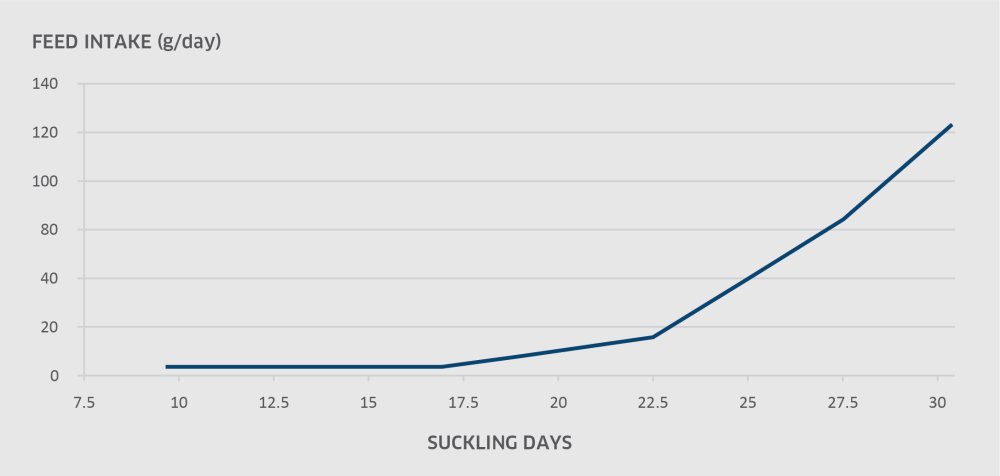
Figure 2. Dry feed intake of pre-weaned piglets in grams per day (Source: Landbrugsinfo)
Contact:
Contact us using the following form.