























 Company
Tonisity
Ireland
3
products
105
Publications
534
Followers
Company
Tonisity
Ireland
3
products
105
Publications
534
Followers
How Early Intestinal Support May Influence Mortality in PRRS-Affected Piglets


Porcine Reproductive and Respiratory Syndrome (PRRS) remains one of the most destabilising diseases affecting commercial pig production. Even in stabilised herds, PRRS continues to exert pressure on piglet viability, growth performance and batch uniformity, contributing to increased pre-weaning mortality, lower weaning weights and a higher proportion of fall-behind piglets. During acute outbreaks, these effects may intensify substantially, resulting in significant biological and economic losses.
Although PRRS is primarily recognised as a respiratory and reproductive disease, its indirect effects on intestinal function during early life are often overlooked. Reduced vitality, compromised voluntary intake and systemic inflammation may create physiological conditions in which piglets struggle to maintain normal growth trajectories. In this context, strategies that support intestinal functionality during the first week of life warrant closer consideration.
Why intestinal function matters during PRRS challenge
The first days after birth represent a critical period of intestinal development in piglets. Enterocytes, the epithelial cells lining the small intestine, proliferate rapidly and play a fundamental role in maintaining intestinal function and supporting productive performance.
- Their activity directly influences:
- nutrient absorption;
- maintenance of villus structure;
- intestinal barrier integrity;
- efficient transport of water and electrolytes.
Under PRRS pressure, reduced appetite and systemic inflammatory stress may compromise enterocyte metabolism, limiting absorptive efficiency precisely when piglets are most dependent on rapid intestinal maturation. As enterocyte function declines, nutrient uptake decreases, growth slows and vulnerability to performance losses increases.
Supporting intestinal function during this critical developmental window may help preserve gut integrity and maintain absorptive capacity, allowing piglets to sustain nutrient utilisation despite viral challenge. Field evidence provides insight into how these biological mechanisms may translate into measurable production outcomes.
Severe PRRS outbreaks: field evidence from commercial systems
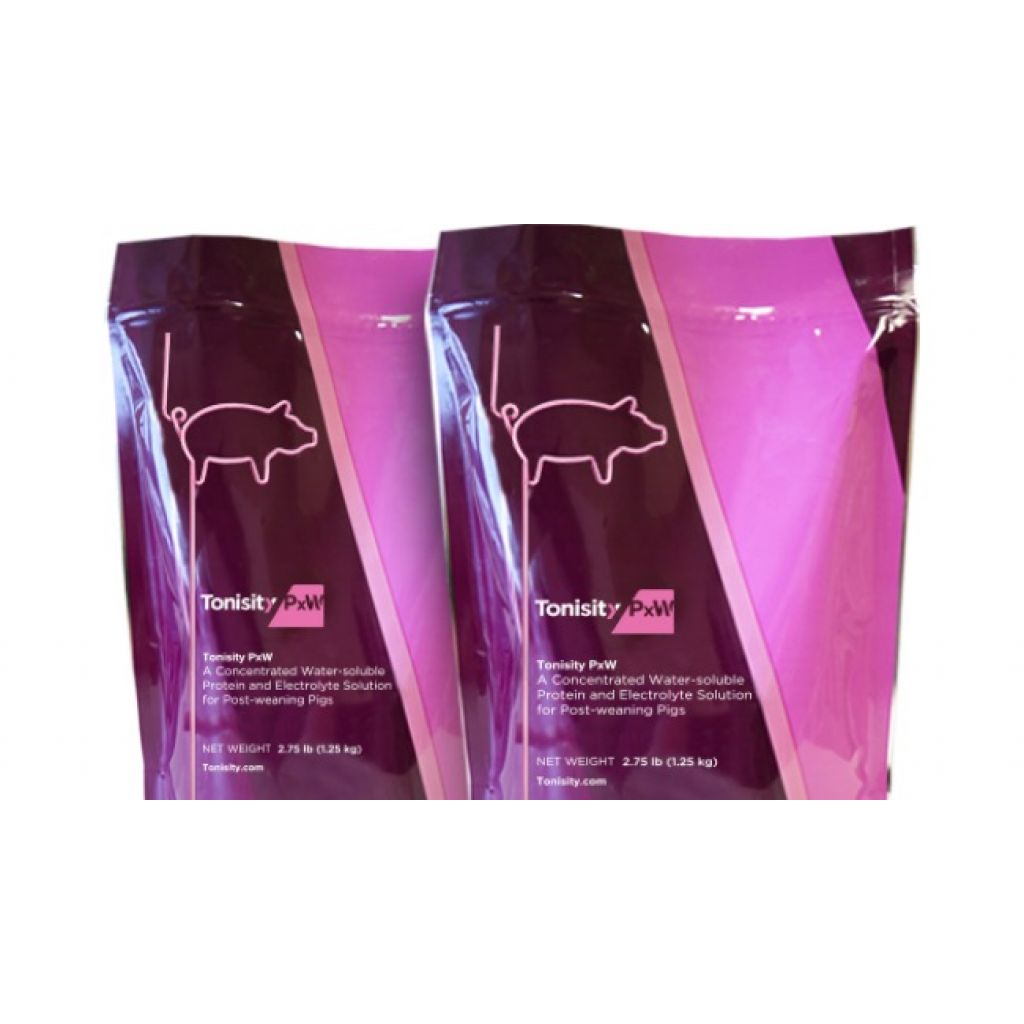
A large-scale commercial study conducted in the United States (17-061-P-P) evaluated the impact of early intestinal support during a severe PRRS outbreak on a 14,000-sow farm. The study included 876 sows and 9,377 live-born piglets allocated to treated and control groups. Piglets in the supplemented group received a 3% isotonic protein solution from day 2 to day 8 of life and again around weaning.
- The reported outcomes showed substantial differences between groups:
- Pre-weaning mortality decreased from 14.10% to 7.92%;
- Nursery mortality declined from 13.85% to 5.18%;
Overall mortality, measured from birth to six weeks post-weaning, decreased from 26.1% to 12.8%, representing an approximate 50% reduction.
Beyond survival, labour associated with managing fall-behind piglets was also markedly lower, with gruel administration effort reduced to one third of that required in control groups.
These findings suggest that maintaining intestinal function during early life may significantly influence piglet resilience under periods of severe PRRS pressure.
Consistent outcomes in PRRS-positive herds
Similar observations have been reported under commercial PRRS-positive conditions. In Belgium (20-058-P-P), a 700-sow PRRS-positive farm with historical pre-weaning mortality of approximately 12% evaluated the same supplementation approach. Pre-weaning mortality decreased from 9.2% in controls to 6.5% in supplemented piglets, corresponding to a 29% reduction, while weaning weight increased by 160 g (+2.4%).
A broader perspective emerges from a combined analysis of seven studies conducted in China, encompassing PRRS-stabilised and lower-health-status environments. Across 512 litters and 5,296 weaned piglets, supplementation from day 2 to day 8 and pre-weaning administration was associated with:
- 360 g higher average weaning weight;
- 29% fewer fall-behind piglets;
- 9% increase in full-value piglets;
- 16–17% lower pre-weaning mortality.
At the individual level, 36% more piglets improved their weight category between birth and weaning, while 19% fewer regressed. Collectively, these observations suggest that early intestinal support may influence not only survival, but also weight distribution and batch uniformity under PRRS pressure.
From intestinal integrity to productive stability
Across different production systems, a common pattern emerges: preservation of intestinal functionality during early life appears closely associated with improved productive stability under health challenge.
The isotonic protein solution does not exert therapeutic activity against PRRS itself. Rather, observed effects appear linked to supporting enterocyte metabolism and maintaining intestinal structural integrity during periods of heightened vulnerability.
When intestinal function remains stronger during the first weeks of life, piglets may be better positioned to maintain:
- nutrient absorption;
- growth potential;
- productive consistency;
- resilience under health challenge.
In practical terms, this has been associated with mortality reductions ranging from 10% to 29% in commercial PRRS-positive systems, and up to 50% lower overall mortality during severe outbreak scenarios. Improvements in weaning weight of up to 360 g, together with reductions of up to 29% in fall-behind piglets, further illustrate the relationship between early intestinal support and downstream performance stability.
Why herd uniformity matters during PRRS challenge
In PRRS-affected systems, variability is often as economically damaging as mortality itself. Uneven growth, increased need for interventions and prolonged production cycles contribute to reduced efficiency and greater management complexity.
Strategies that support early intestinal development may therefore contribute not only to survival, but also to:
- improved batch consistency;
- fewer lightweight or fall-behind piglets;
- reduced management pressure;
- greater productive predictability.
In challenged production environments, maintaining uniformity can be as important economically as reducing mortality.
Final perspective
PRRS affects more than respiratory performance alone. The indirect effects of reduced intake, systemic inflammation and compromised intestinal function may contribute significantly to performance losses observed in affected herds.
Supporting intestinal function during the first days of life may help preserve nutrient absorption, maintain growth potential and improve resilience in piglets under PRRS pressure. As understanding of the relationship between gut function and productive outcomes continues to evolve, early intestinal support is receiving increasing attention as part of broader strategies aimed at improving piglet robustness in challenged systems.
Explore the science behind Tonisity Px and discover how early intestinal support may contribute to improved resilience and performance in piglets under PRRS challenge.
Learn more about the product or contact our team to discuss support strategies for your production system.


Contact:
Contact us using the following form.