




















 Company
NEDAP Livestock Management
Netherlands
5
products
18
Publications
98
Followers
Company
NEDAP Livestock Management
Netherlands
5
products
18
Publications
98
Followers
Granja Bifet Gracia: obtaining a perfect return on investment with Nedap technology


We visited the company Bifet Gracia’s 2500 sow farm located in the Huesca province, one of the most important pig producing areas in Spain. We were greeted by the CEO, Eduard Bifet, and by the farm manager Antonio Aguilar. Bifet Gracia is a family company that specializes in beef and pig production.
Bifet Gracia: family business, independent producer
Eduardo Bifet speaks with pride about the company strategy. Bifet Gracia is a family business that has been able to remain an independent producer within the competitive Spanish pig sector.The company follows a clear strategy as they work with the entire pig cycle- from the sow farm to raising and fattening their own animals , and also to work with their own facilities Within the context of production and with the cyclical crises that the pig industry suffers, it is not easy to remain an independent producer in Spain. The company, Bifet Gracia, clearly understands that in order to compete within the current pork industry, one must work very professionally. In this sense, Eduardo shares their vision of how important incorporating technology on the farms is, but doing so strategically by looking for systems that provide solutions to specific problems and that offer a good return on investment.
We toured the farm with Antonio Aguilar, the manager of the sow farm who really knows the facilities in depth. Coming from an agricultural background, he joined the company 13 years ago, when the sow farm was only in the project phase. Antonio participated in the building process and then assumed different responsibilities working on the farm until his actual role as manager of the sow unit.
What was the main reason for installing automatic feeding in the farrowing room?
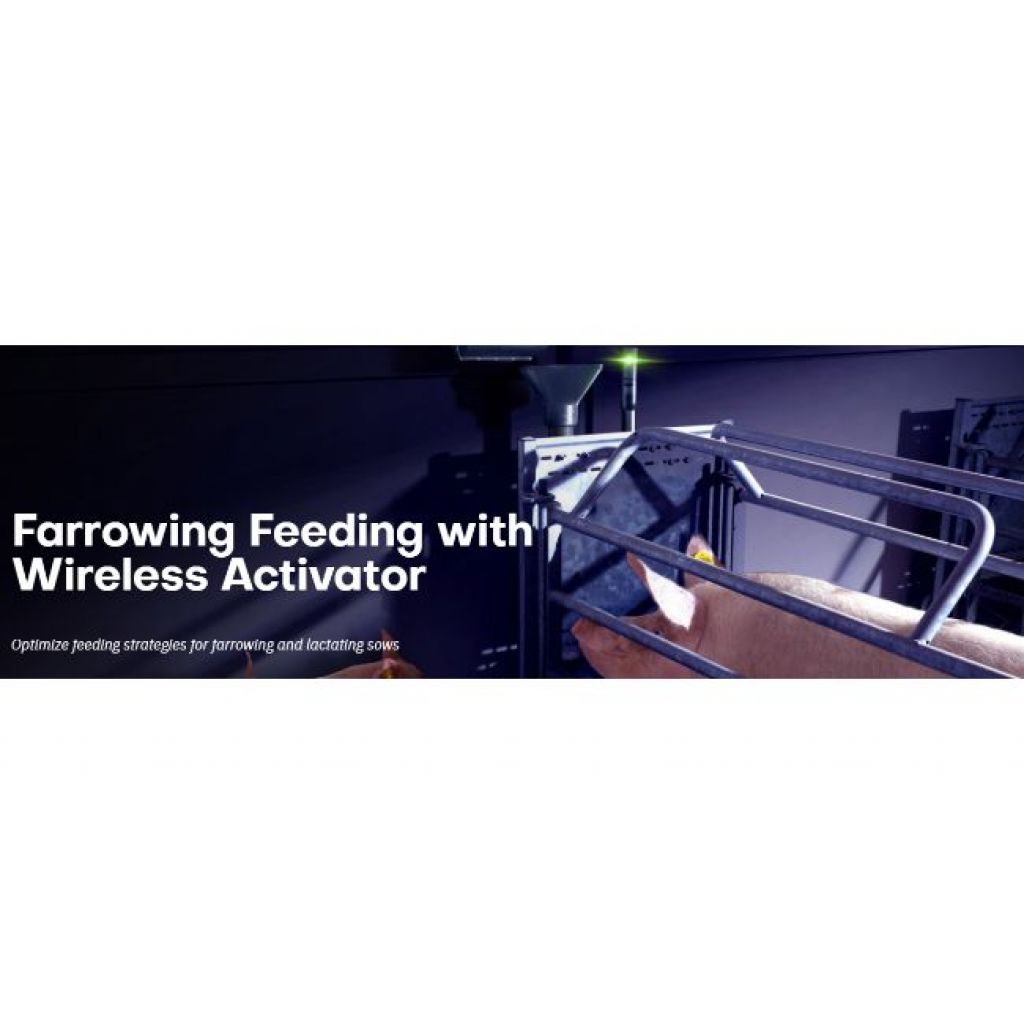
in lactation, with the manual system that we used to have previously, had been identified as one of the elements that was limiting farm productivity. The number of times that the sows where manually fed was limiting the feed consumption in lactation and, on the other hand, involved a lot of work for the staff. Also, to improve productivity we decide to change the genetic supplier towards a more prolific sow. With this change, looking for larger litters, the need to install an automatic feeding system in the farrowing house was even more evident in order to improve the production results and the condition of the sows at weaning.
Why did you choose Nedap as your technology supplier?
When it was time to make a decision, Nedap had specific characteristics that made it a perfect candidate. Nedap had very powerful software that fit the management program that the farm was already using. Another important element was the ease of installation considering the existing feeding systems in our farrowing pens. The Nedap Compact Feeder can adapt perfectly to the feed dispensers that we had in the farrowing pens. This matter is especially important to take into account when working with a fully functioning farm. In our case, and to interfere less with the day-to-day workings of the farm, we opted for the 512 Nedap Compact Feeders to be installed as the different farrowing rooms were emptied during a complete production cycle.
What were the first impressions working with the Nedap system?
Once the installation of the Nedap Compact feeder in the farrowing rooms was finished, we could see right away how easy it is to work with the system. The program is very intuitive and practical to learn, and training staff was fast. The daily processes are also tremendously simple. Basically, after setting the feeding curves for each and every animal, the worker checks the feeder and, depending if the sow ate or not, he enters any upward or downward modification in a mobile phone or tablet. Automatically that information is updated in the system and then the program applies it directly to the feeding curve. All data in the Nedap system can also be transferred to our management system. We decided to work on the basis of three feeding curves and then increase or decrease the amount of feed depending on each sow. The three feeding curves we use are for gilts, sows, and a specific feeding curv for sows that have few piglets. We adjust on the basis of those three feeding curves and according to what each sow eats. It is important to make clear that the staff should continue to supervise sows, checking all feeders and make sure all sows stand up, but now staff can spend more time doing other tasks that require their attention and we are fully confident that sows are fed according to the curve every day of the year.
What advantages have you observed after installing the Nedap Compact Feeder in the farrowing house?
After installing the Nedap Compact Feeder, we increased the number of meals from 3 to 5, however we could increase them further. This increment in the number of meals has made the feed intake in lactation increase and as a result, sows come out with a better body condition at weaning and we have seen also, an improved quality of the piglet with a better weaning weight. We all know that a better-quality weaned piglet does better in the rest of the productive stages. If the weaned sows come out with a better condition, they will perform better in their next productive cycle. We work with lactation length of 23-24 days on average and it important that sows finish their lactation with a good condition. Another important element to consider is that the Nedap Compact Feeder has helped us to better adjust feed consumption and thereby reduce feed waste in lactation. Controlling feed costs is essential to achieve optimum production cost.
Having the Nedap automatic feeding system in the farrowing house has other benefits. It allows us to maintain the number of meals regardless of limited staff because of holidays, sick leave, etc. Sows are more productive every day and each meal they receive is important, on the one hand, to maintain the feeding routine and above all to achieve the maximum possible feed consumption. When we worked with the manual feeding system, on the days with less staff, such as weekends or holidays, it was impossible to give all the meals we would have liked. Now, as a basic standard, we work with five meals a day: at 8:00 we give the largest portion that represents 30% of the total, at 12:00 and at 17:00 we give two meals of 15% each. Taking advantage of the cooler hours of the night, we give two more meals at 22:00 and 04:00 in the morning, each 20% of the total feed allowance. We can also adjust the feeding schedule to the time of the year. In the hot season, we can encourage the sows to eat in the cooler hours of the night and with this, we sustain better feed intakes during those difficult times.
A great advantage that we have observed is the reliability of the Nedap equipment, a basic requirement for any equipment on the farm. We have installed 512 Nedap Compact Feeders 2 years ago and we have never had any noteworthy incidence. Everybody working on a farm knows how important it is to have reliable material, especially when it is for something as important as feeding. The maintenance has been minimum and also, we have the support provided by the technical service team from Agrogi. If we have any issue, they are always available at any time to solve it, even though the majority of the incidences are solved over the phone, which not only makes fixing the problems smoother, but it is better for farm biosecurity.
We want to finish the conversation by talking about the future plans that Eduardo Bifet has for the company. What are the company’s next projects?
Our plan is to continue with the strategy that we have maintained so far: improve the efficiency of the farm, continue with the policy of investing in our own facilities with the idea of increasing our finishing capacity and keep focusing on biosecurity and animal welfare. We must remain vigilant, in order to detect and implement the best technological developments and continue investing wisely in improving our farming operation.